


10/08/2026
From a flat sheet of paper, Origami art can create delicate forms using nothing but folds. Behind this seemingly simple beauty lies a long cultural journey closely tied to the development of paper and Japanese art. Today, Origami art goes far beyond familiar folding patterns, expanding into a wide range of techniques and creative styles. Join AN KOI as we explore the appeal of this art form and how to start folding Origami.
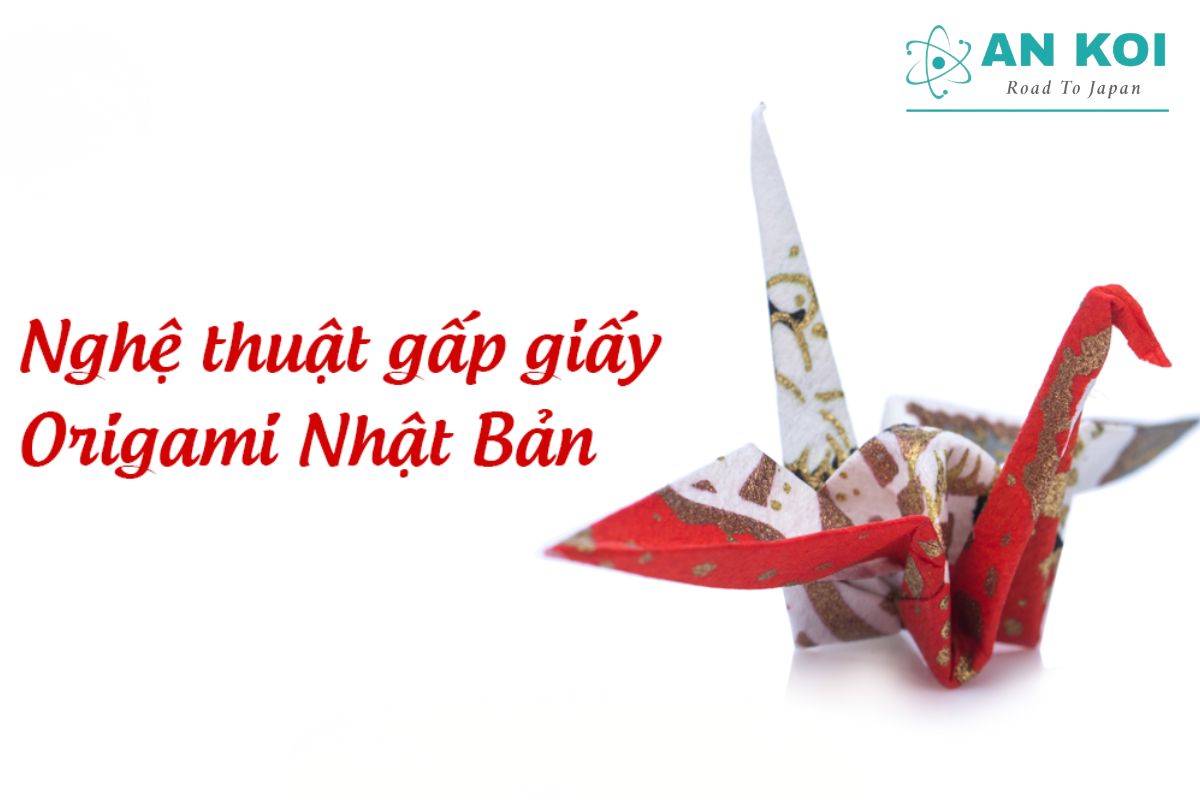
Japanese Origami art transforms simple sheets of paper into models rich in beauty and symbolism.
Where did Origami art originate?
Origami art has a long history and is closely associated with Japanese culture. From simple paper-folding methods, it gradually developed into an art form with a wide range of techniques and styles.
The journey from China to Japan
The history of Origami art is often traced back to around the 1st–2nd centuries, when papermaking techniques emerged in China. By around the 6th century, paper had reached Japan via the Korean Peninsula. In Japan, paper was initially highly valuable and used in ceremonies; over time, decorative and symbolic folding practices began to appear. Over many centuries, Japanese paper-folding art continued to develop, laying the foundation for Origami as a distinctive art form within Japanese culture.
How Origami changed over time
From folds used in ceremonial settings, Origami art gradually became more common in everyday Japanese life. During the Edo period (1603–1868), paper became more widely produced, making Origami folding accessible to more people and bringing it into play and education. Many familiar models also took shape and were passed down through instructional books. In the 20th century, Origami art continued to evolve with new notation systems and techniques, spreading beyond Japan and becoming an art form enjoyed around the world.
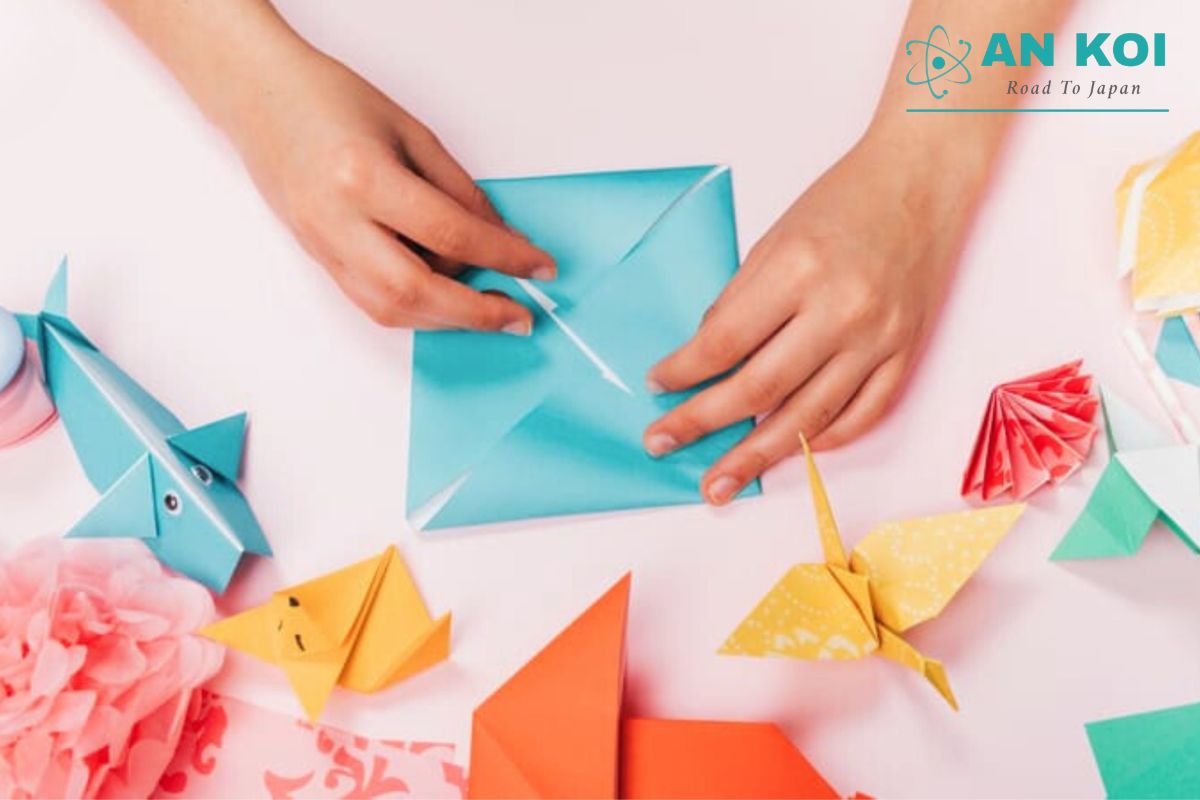
Origami art gradually became part of everyday life in Japan as paper grew more accessible over time.
What the name Origami means in Japanese
The name Origami combines “ori” (折り), meaning “folding,” and “kami” (紙), meaning “paper.” The term directly reflects the method behind Origami art: transforming flat paper into different forms through folds. “Origami” came into widespread use in Japan during the 20th century and gradually became the international name for the craft. Today, Origami paper-folding art is not only associated with Japanese culture but has also developed into many creative styles around the world.
What defines Origami paper-folding art
Origami art stands out for its ability to transform a flat sheet of paper into three-dimensional forms through folding. Its appeal comes from the simplicity of the material and the remarkable variety of shapes that can be created.
Creating forms without cutting or gluing
A defining feature of traditional Origami art is that forms are created mainly through folding rather than cutting or gluing paper. Starting with a single sheet, the folder builds a sequence of creases that form angles, planes and three-dimensional structures. As a result, Origami paper-folding art can produce many different shapes without additional materials. This principle also requires careful planning of the position and direction of each fold. In complex models, even a small change can affect the entire final form.
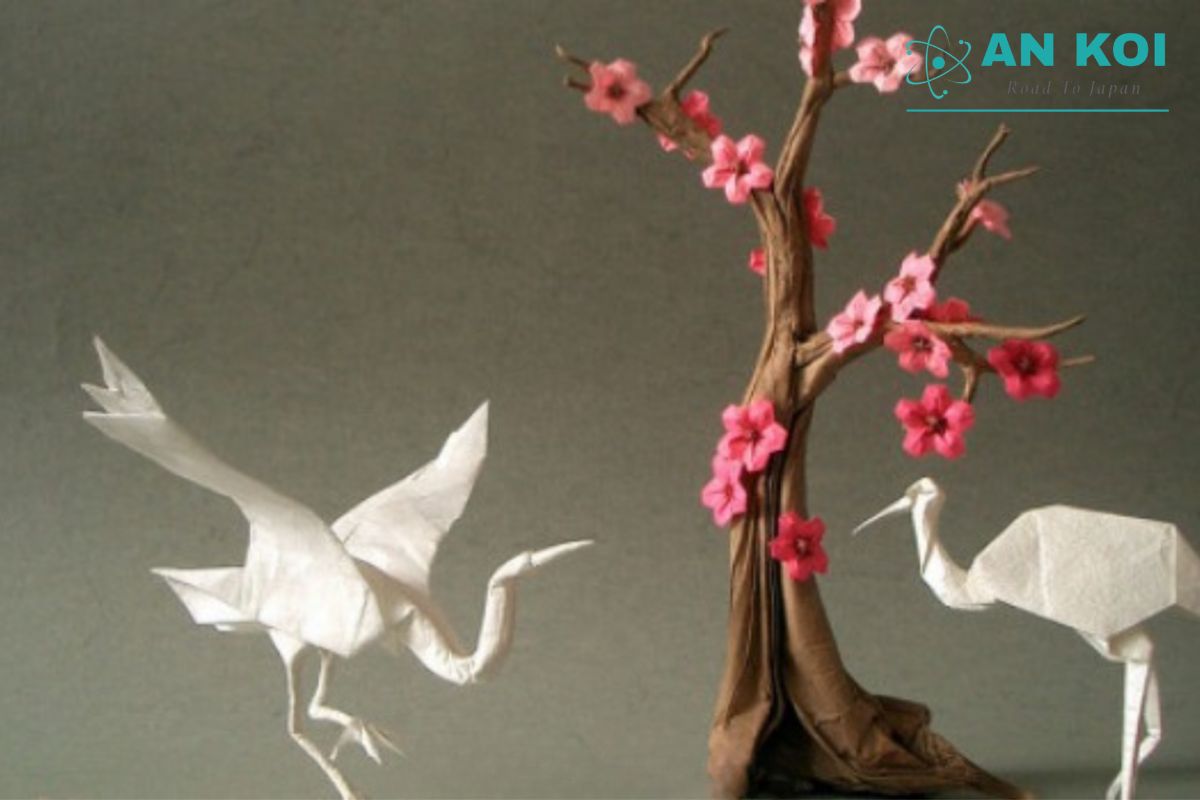
This paper crane illustrates the principle of shaping with folds while minimizing cutting and gluing in traditional Origami.
Basic folds beginners should know
To become familiar with Origami art, beginners should start with several fundamental folds. A mountain fold creates a raised crease, while a valley fold creates an inward crease. Half folds, diagonal folds and reverse folds also appear frequently in common Origami folding patterns. Once these movements are performed correctly, learners can read diagrams more easily and control the paper more effectively. These folds also provide the foundation for combining multiple techniques to create more complex models in Origami art.
Origami requires precision
Precision plays an important role in Origami art because a misaligned fold can affect every step that follows. The folder should carefully align edges, intersections and angles before sharpening each crease. In multi-step Origami paper-folding art, small early errors can accumulate and leave the model unbalanced. Rather than folding too quickly, beginners should check each step before moving on. This careful approach produces cleaner results while also developing concentration and patience.
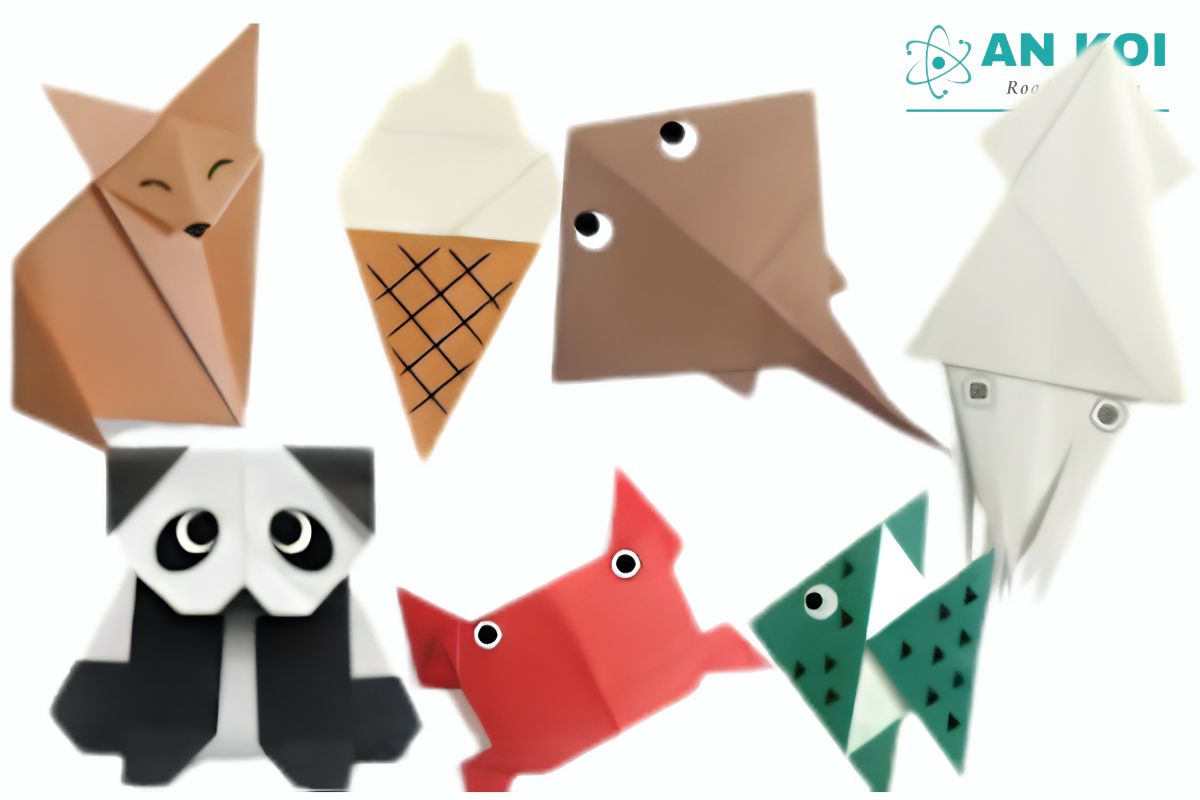
Simple paper-folding models help beginners practise precision, edge alignment and control over each crease.
>> See also:What is Omotenashi spirit? The art of Japanese hospitality
Popular Origami styles and forms
Origami art has developed into many styles with different shaping methods and levels of technical difficulty. From pure Origami, which emphasizes simplicity, to modular forms and moving models, each style has its own character. Understanding these styles helps learners gain a clearer view of Japanese paper-folding art and choose a suitable direction for practice.
1. Pure Origami and Japanese paper-folding art
Pure Origami is created from a single sheet of paper, mainly through folds and without cutting or gluing. It is one of the most representative forms of Origami art, emphasizing simplicity and precision. In Japanese paper-folding art, the folder must make full use of the paper’s structure to achieve the intended form. Simple models are suitable for beginners, while complex designs require more advanced skills.
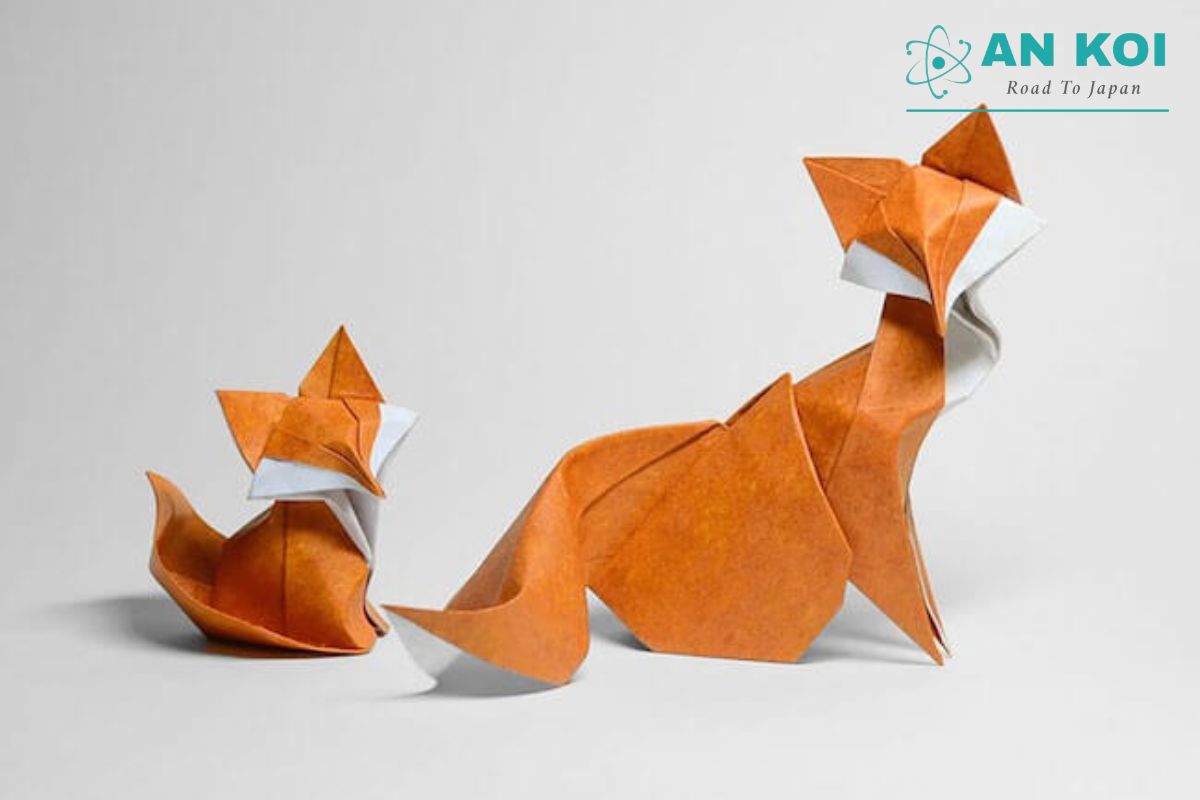
This paper fox illustrates pure Origami art, with the form created mainly through folds in a single sheet of paper.
2. Action Origami creates movement through folds
Action Origami creates models that can move when pulled, pushed or gently manipulated. Flapping birds and paper toys are familiar examples. The appeal of this form of Origami art lies in combining visual form with a mechanism for movement. The folder must calculate folds and connection points precisely. This is a more advanced direction in Origami paper-folding art and is better suited to people who already understand the basic techniques.
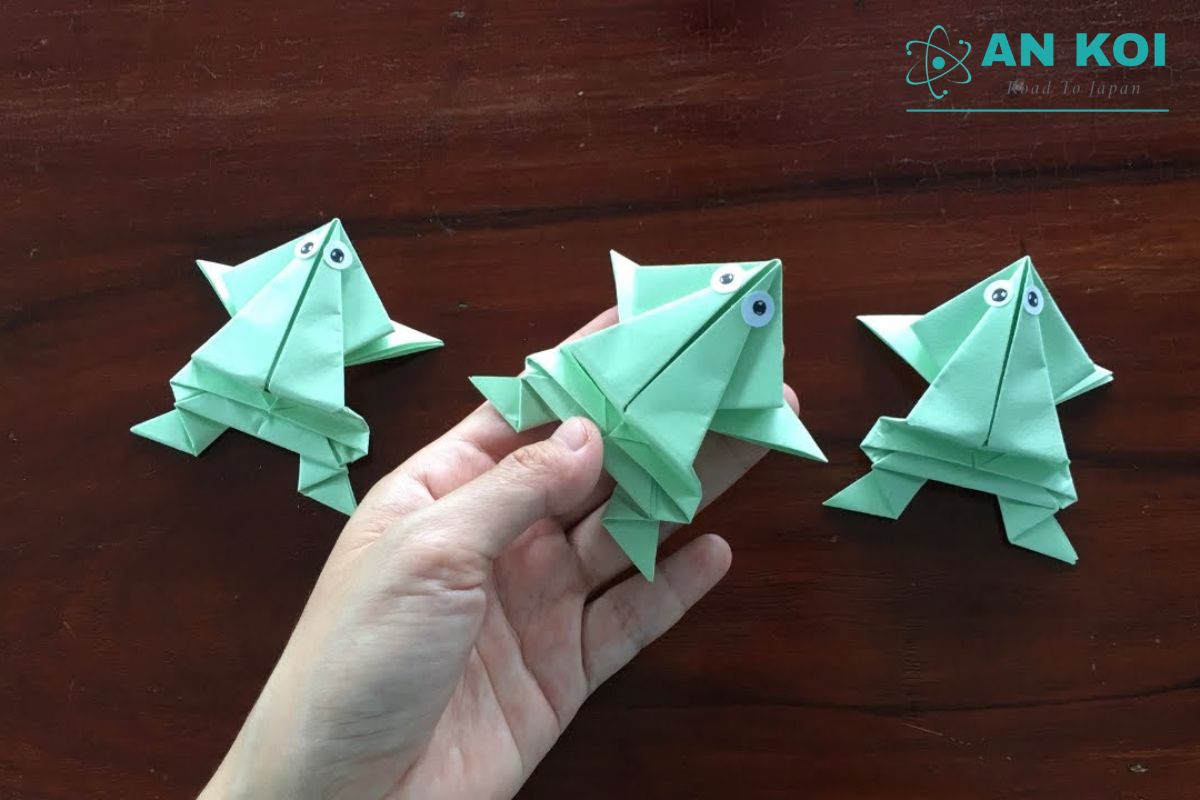
This paper frog is an example of Origami that uses a folded structure to create a movement effect when handled.
3. Modular Origami made from multiple pieces
Modular Origami uses multiple sheets that are folded separately and then connected to form a complete model. Individual units may be simple, but when combined they can create large, symmetrical and visually striking structures. This form of Origami art is especially notable for geometric creativity. When making modular Origami, folders need to pay attention to the number, size and connection of each unit. Beginners should start with models that use fewer pieces.
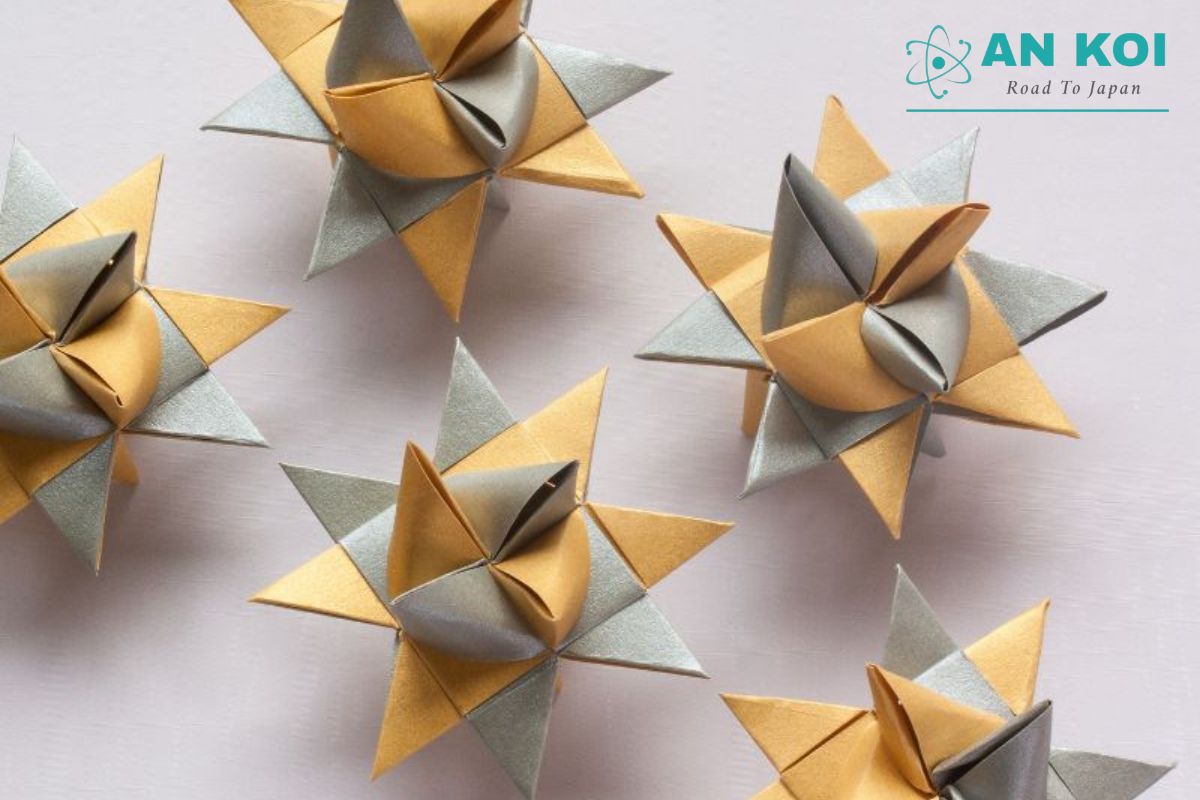
Modular Origami connects multiple folded paper units to create symmetrical and eye-catching geometric models.
4. Wet-folding Origami for softer, more natural forms
Wet-folding Origami involves dampening the paper before shaping it, making the material softer and easier to curve. The method is often used for animals, faces and other natural forms. In Origami art, this technique creates softer results than conventional crisp folds. However, wet-folding Origami requires careful control of both moisture and hand pressure. Beginners should practise with simple models first.
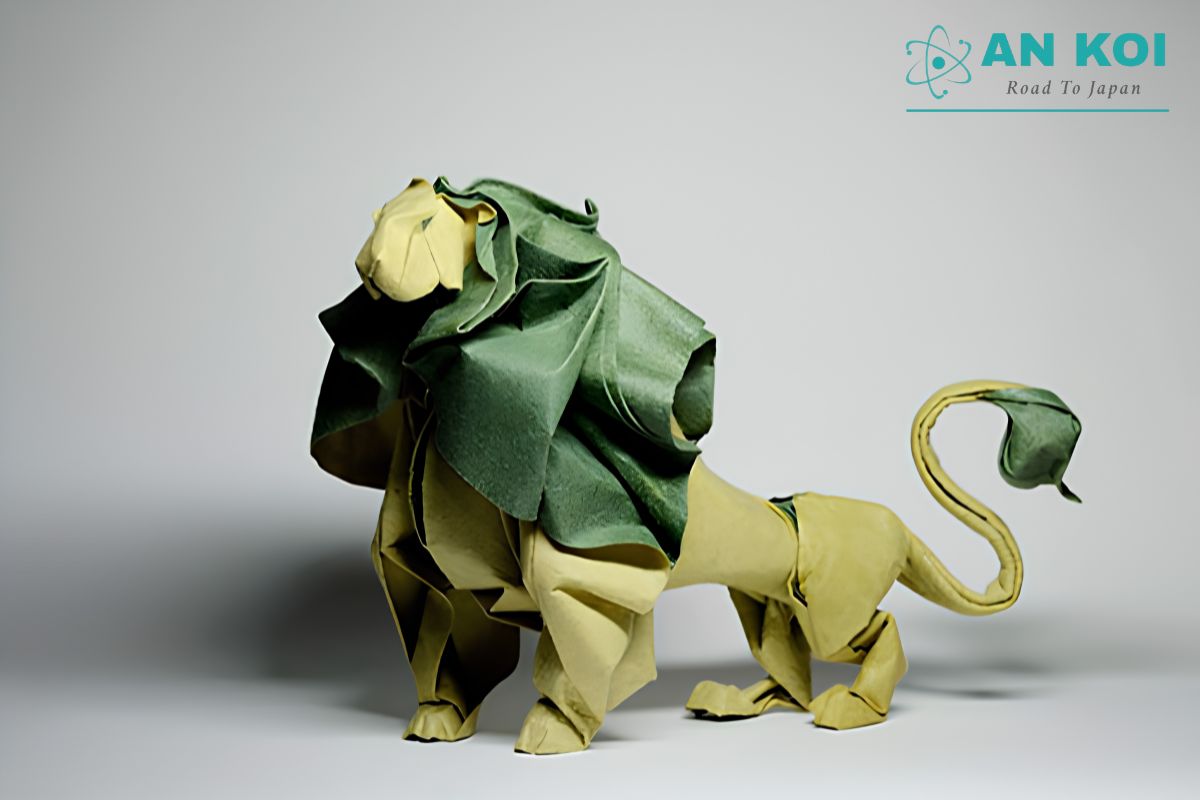
This lion model shows how Origami art can create soft, natural curves through appropriate paper-handling techniques.
5. Kirigami and how it differs from Origami
Kirigami is similar to Origami art but allows the paper to be cut during the shaping process. While traditional Japanese paper-folding art relies mainly on folds, Kirigami combines folding and cutting to create distinctive structures. This makes it possible to produce forms that are difficult to achieve with pure Origami alone. When learning Origami folding, understanding the difference between the two helps learners recognize the limits and unique features of each method.
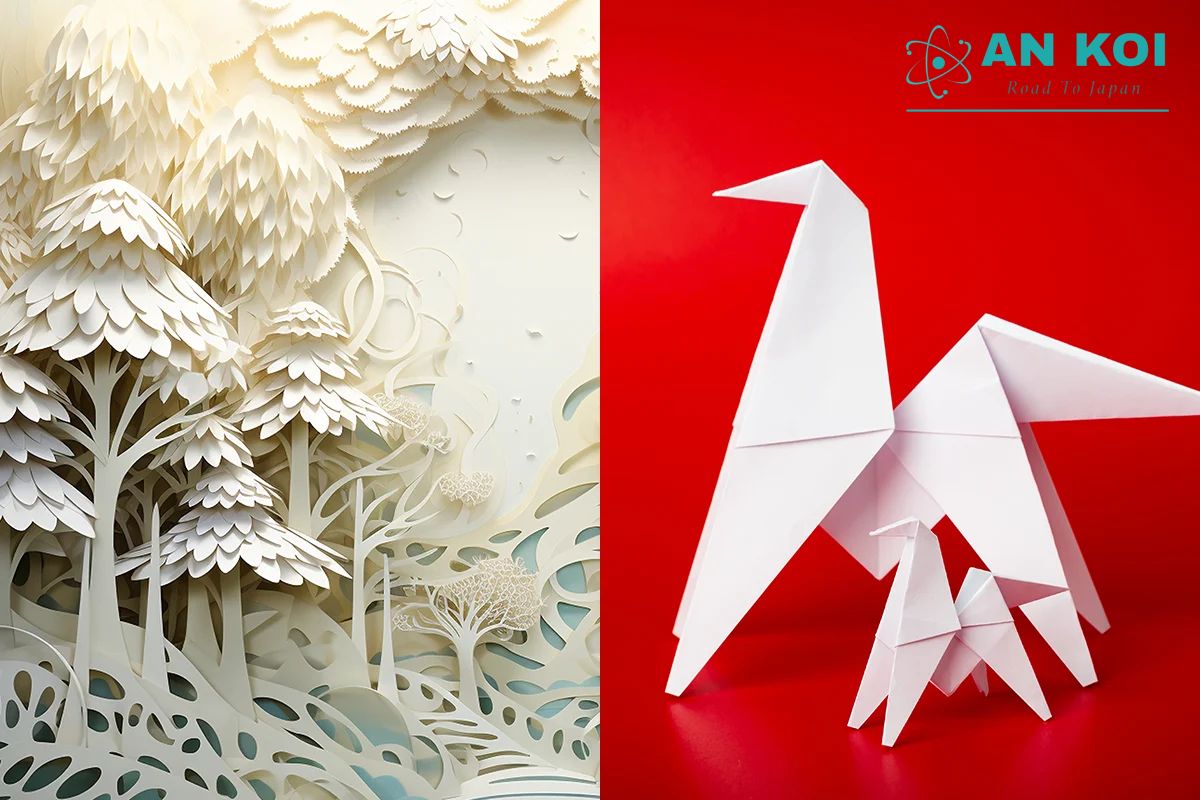
The illustration shows the difference between Kirigami, which uses paper cutting, and traditional Origami, which relies mainly on folds.
>> See also:Tokyo, the capital of Japan: Facts not everyone knows
Origami art – How to fold paper from basic to advanced
To learn Origami art, beginners should progress from basic folds to more complex techniques. Mastering each step makes Origami folding easier and more accurate.
How to make mountain and valley folds
Mountain and valley folds are two fundamental techniques in Origami art. A mountain fold creates a raised crease, while a valley fold creates an inward crease. Beginners should practise on square paper before attempting more complex models. When folding Origami, sharpen the crease just enough to keep the paper from wrinkling or tearing. Mastering these two techniques will make diagrams easier to read and improve shaping accuracy.
Reverse-folding techniques for beginners
Reverse folds are often used to create details such as beaks, legs or tails in Origami art. The technique requires the folder to identify the correct crease before reversing the direction of a section of paper. In Origami paper-folding art, beginners should practise on simple models to become familiar with how the paper moves. Once comfortable, reverse folds can produce clearer details and add complexity to a model.
How to read Origami symbols and diagrams
Diagrams help people learning Origami art understand the sequence of steps without having to read lengthy instructions. Once familiar with the symbols, folding Origami from a diagram becomes faster and more accurate. Common basic symbols include:
- Arrow: Shows the direction of movement or where the paper should be folded.
- Dashed line: Usually indicates the location of a fold.
- Illustration: Shows the state of the paper after each step.
- Open or flip symbol: Indicates how the paper structure should be changed in the next step.
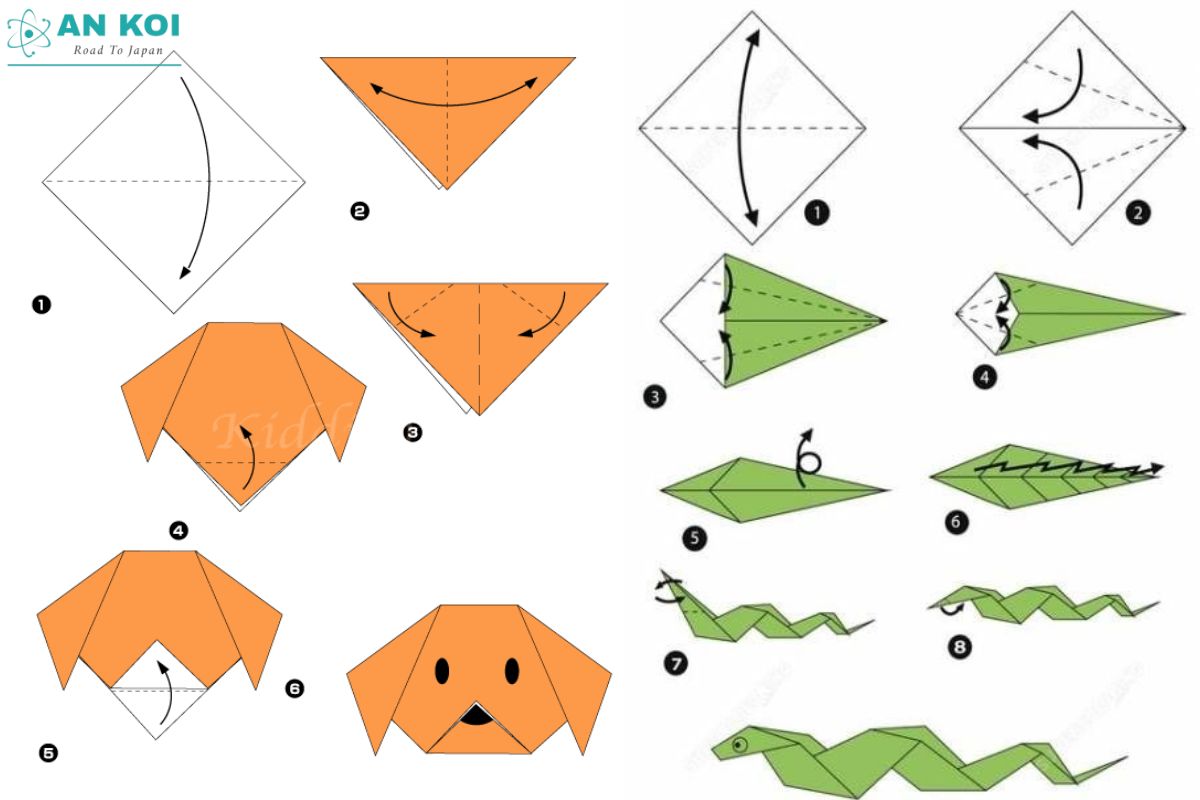
Crease diagrams and symbols help learners of Origami art follow the correct shaping sequence step by step.
Tips for keeping folds crisp and balanced
To create beautiful and balanced Origami art, pay attention to the following steps while folding Origami:
- Align the edges and corners accurately before making a new fold.
- Press each crease firmly but with controlled force so the line is clear without wrinkling the paper.
- Check that both sides are balanced before moving to the next step.
- Rotate the paper in the direction shown in the diagram to avoid performing the wrong action.
- For complex models, check each step rather than waiting until the model is complete.
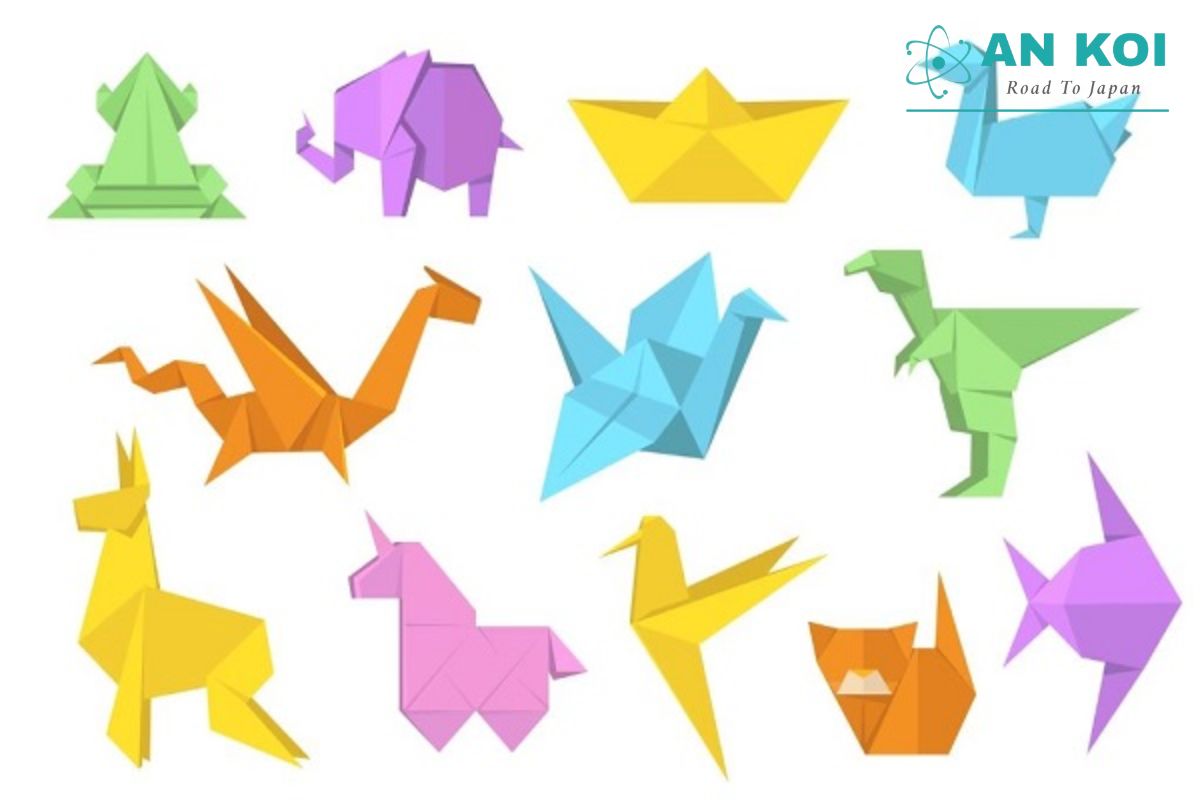
A wide variety of Origami models, from simple to complex, helps beginners choose folds suited to their skill level.
Popular Origami paper-folding models
Origami art offers many models ranging from simple to complex, suitable for different skill levels and interests. Beginners should start with familiar, easy-to-fold forms before moving on to more intricate designs.
How to fold the iconic Origami crane
The paper crane is one of the best-known symbols of Origami art and is associated with peace, hope and good fortune in Japanese culture. This model is suitable for beginners and helps practise edge alignment, symmetrical folds and finishing details such as the wings, head and tail.
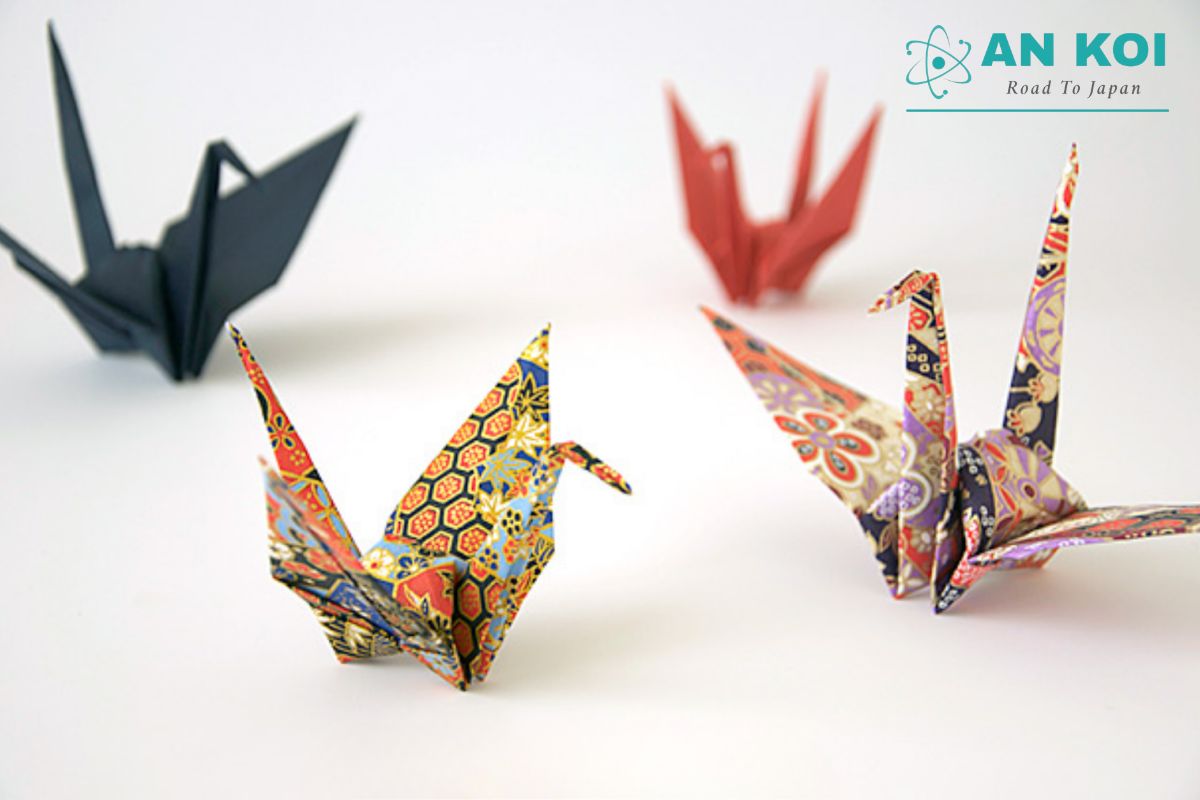
The paper crane is one of the most familiar symbols of Origami art, associated with peace, hope and good fortune.
A simple Origami flower that is easy to make
Flowers are popular Origami folding models because of their attractive appearance and practical uses. Beginners can start with designs that require only a few steps before trying flowers with multiple layers of petals. Finished pieces can be used for cards, paper bouquets or personalized decorations.
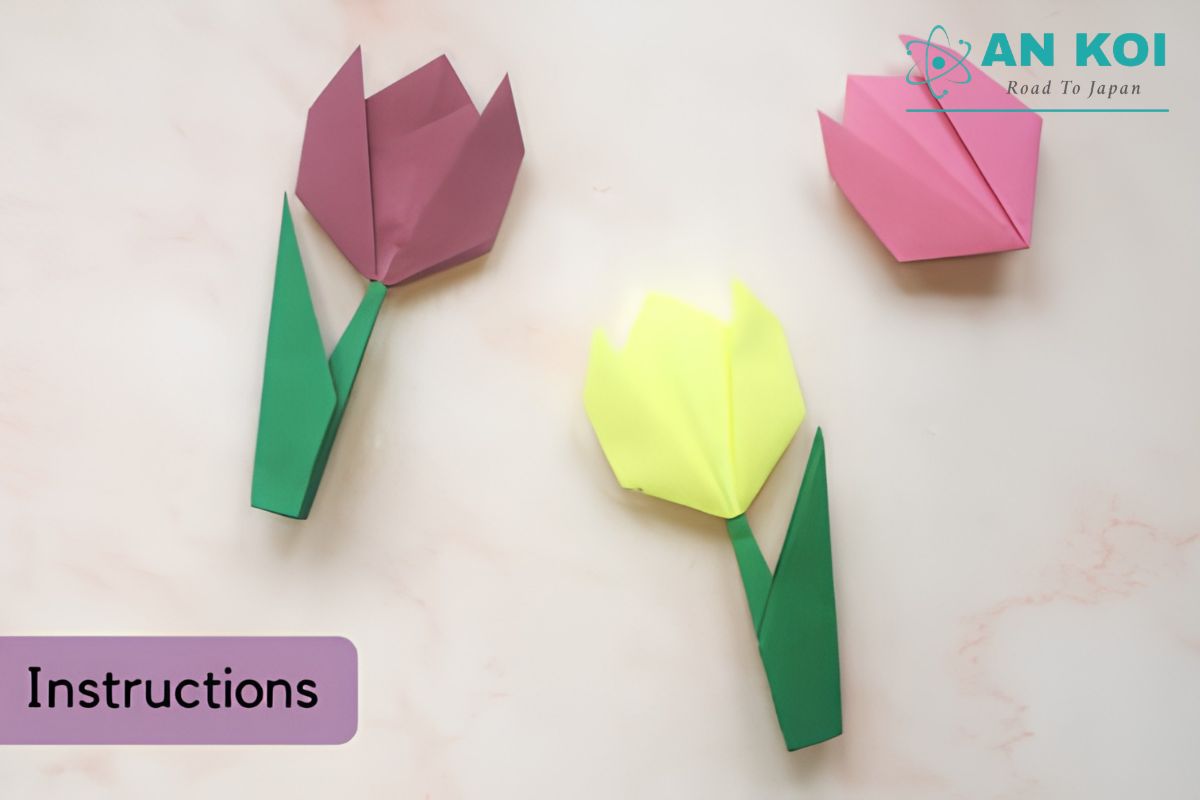
A simple Origami paper flower can be used for cards, bouquets or decorative pieces with a personal touch.
Animal models from basic to complex
Animals are a diverse theme in Origami art and are suitable for many skill levels. Beginners can try dogs, cats or fish before moving on to more difficult models such as birds, elephants or dragons. With each model, folders gradually become familiar with different ways of handling creases.
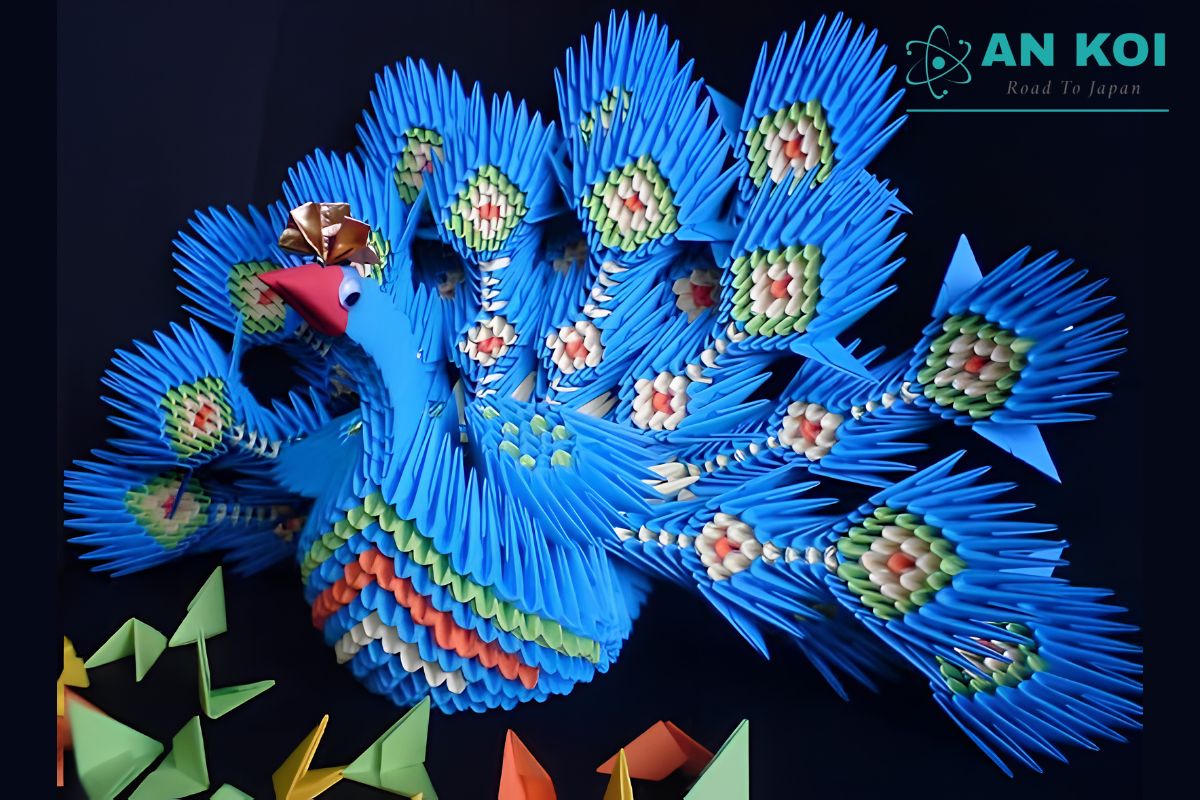
This peacock model shows how animal themes in Origami art can develop into highly detailed designs.
Origami models for decorating living spaces
Origami paper-folding art can become an appealing decorative feature in a living space. Flowers, birds, geometric forms and modular models can be placed on tables, displayed on walls or used as hanging decorations. Choose paper colors and sizes that complement the surrounding space.
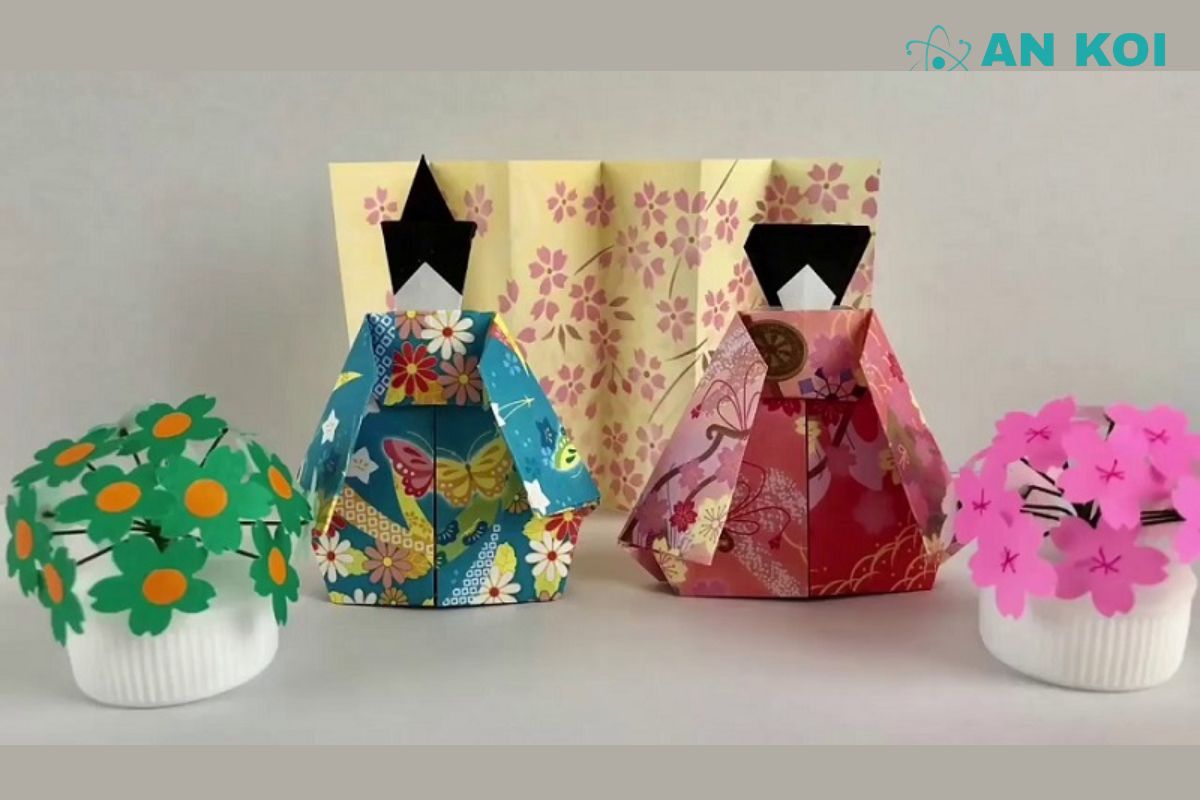
Origami models such as paper dolls and flowers can become decorative highlights in a living space.
Origami art is not only about turning a sheet of paper into a new shape; it is also a combination of technique and creativity. Every fold requires precision and patience to create a complete finished piece. If you enjoy detailed work, you can begin with simple Origami folding models while exploring more news about Japanese culture to learn about the country’s distinctive traditions.
Latest Posts


Hashtags
Contact


