


21/07/2026
Learning Japanese glottal stop pronunciation can be confusing for many beginners because it is represented by only one small character (っ), yet it can completely change both the pronunciation and the meaning of a word. Why do きて and きって look almost identical but cannot be pronounced the same way? To pronounce Japanese naturally, you need to recognize the small っ, identify the consonant that follows it, and maintain the correct mora timing. In this guide, ANKOI explains the reading rules for the Japanese glottal stop, special usage cases, and common pronunciation mistakes so you can speak Japanese more naturally and confidently.

What are Japanese glottal stop? Standard pronunciation rules for beginners.
What is a Japanese glottal stop?
A Japanese glottal stop is a very short pause that occurs before a consonant. It is represented by the small っ in Hiragana or ッ in Katakana. In Japanese linguistics, this feature is called sokuon (促音). Unlike the regular character つ, the small っ is not pronounced as “tsu.” Instead, it occupies one mora and creates a brief pause before the following consonant.
For example:
- きて (kite) means “come.”
- きって (kitte) can mean “stamp” or “cut,” depending on the context.
Although the only difference is a short pause, the meaning changes completely. For this reason, mastering the Japanese glottal stop helps learners pronounce words accurately, improve listening comprehension, and communicate more naturally. The Japanese glottal stop, long vowels, and the syllabic ん are all considered special morae that learners often confuse during pronunciation practice.
How to identify Japanese glottal stop
To recognize the Japanese glottal stop, learners should pay close attention to both the written form of a word and its rhythm. Correctly identifying the small っ helps you avoid mistakenly pronouncing it as “tsu.”
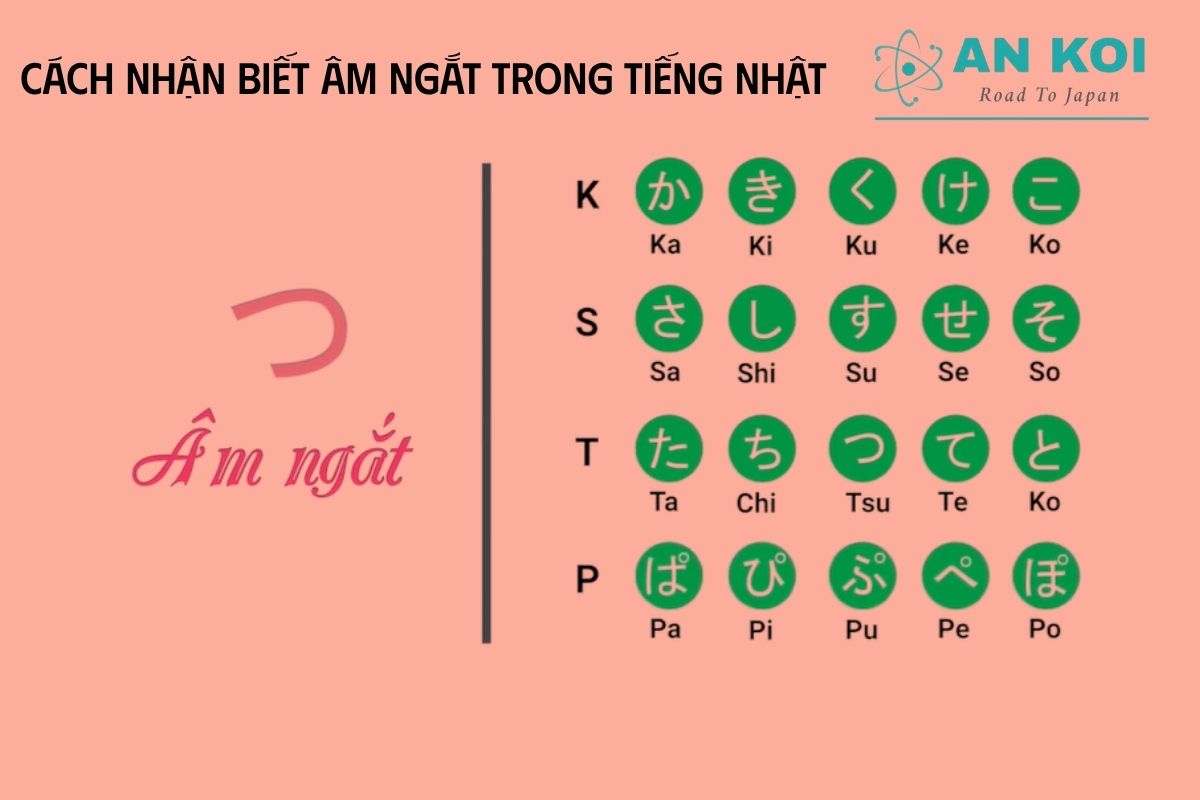
How to identify Japanese glottal stop
1. The position of the small っ in a word
The small っ usually appears in the middle of a word and comes immediately before the consonant that should be briefly held. When you encounter this character, you should not pronounce it as “tsu.” Instead, pause for one mora before saying the following sound.
Some common examples:
- きっぷ (kippu) – ticket: っ appears before the ぱ row.
- けっこん (kekkon) – marriage: っ appears before the か row.
- まって (matte) – wait: っ appears before the た row.
- ざっし (zasshi) – magazine: っ appears before the さ row.
It’s important to distinguish between the small っ character and the large つ character. In つくえ (tsukue– the table), the character つ is pronounced “tsu”. Conversely, the character っ in きって (kitty– tem) only creates a gap. With Katakana, the same rule applies to the small ッ character, such as ベッド (bed).beddo– bed). When learning new vocabulary, it is helpful to highlight or mark the small っ so you can remember the correct Japanese glottal stop pronunciation more easily.
2. Consonants usually follow the Japanese glottal stop
After the small っ, the following sound is usually from the か (k), さ (s), た (t), or ぱ (p) consonant rows. In Romaji, these correspond to the consonants k, s, t, and p. The consonant following the small っ is typically written as a double consonant to indicate the brief pause.
Common patterns include:
- か-row (k): がっこう → gakkou
- さ-row (s): ざっし → zasshi
- た-row (t): きって → kitte
- ぱ-row (p): きっぷ → kippu
In loanwords written in Katakana, the small ッ may also appear before other consonants. For example: バッグ (baggu) – bag, ベッド (beddo) – bed. When learning new vocabulary, identify the consonant that follows the small っ, divide the word into morae, and maintain one mora of silence before pronouncing the next sound. Practicing this rhythm will help you produce the Japanese glottal stop more naturally and reduce the influence of Vietnamese pronunciation habits.
>> See more:Information on admissions for Japanese language programs in Japan.
Rules for pronouncing Japanese glottal stop
Correctly pronouncing the Japanese glottal stop helps learners maintain the natural rhythm of Japanese speech and avoid confusing words with similar spellings. Beginners should first understand the basic pronunciation rules and then practice one mora at a time until the rhythm becomes natural.
1. Rules for pronouncing Japanese glottal stop
The fundamental rule of the Japanese glottal stop is to pause for one mora when you encounter the small っ before pronouncing the next syllable. The small っ is never pronounced as “tsu.” Instead, it functions as a marker that briefly holds the following consonant.
Some examples:
- がっこう (gakkou) – school
が・っ・こ・う - きって (kitte) – stamp
き・っ・て - ざっし (zasshi) – magazine
ざ・っ・し - きっぷ (kippu) – ticket
き・っ・ぷ
When transliterating into Romaji, the consonant after the character っ is often written twice. For example, けっこん is written as kekkon, and まっちゃ is written as matcha. However, learners should not pronounce the two consonants as two separate sounds. The correct way is to hold the sound briefly and then pronounce the second consonant clearly. Understand this rules of Japanese glottal stop will help you pronounce vocabulary more accurately.
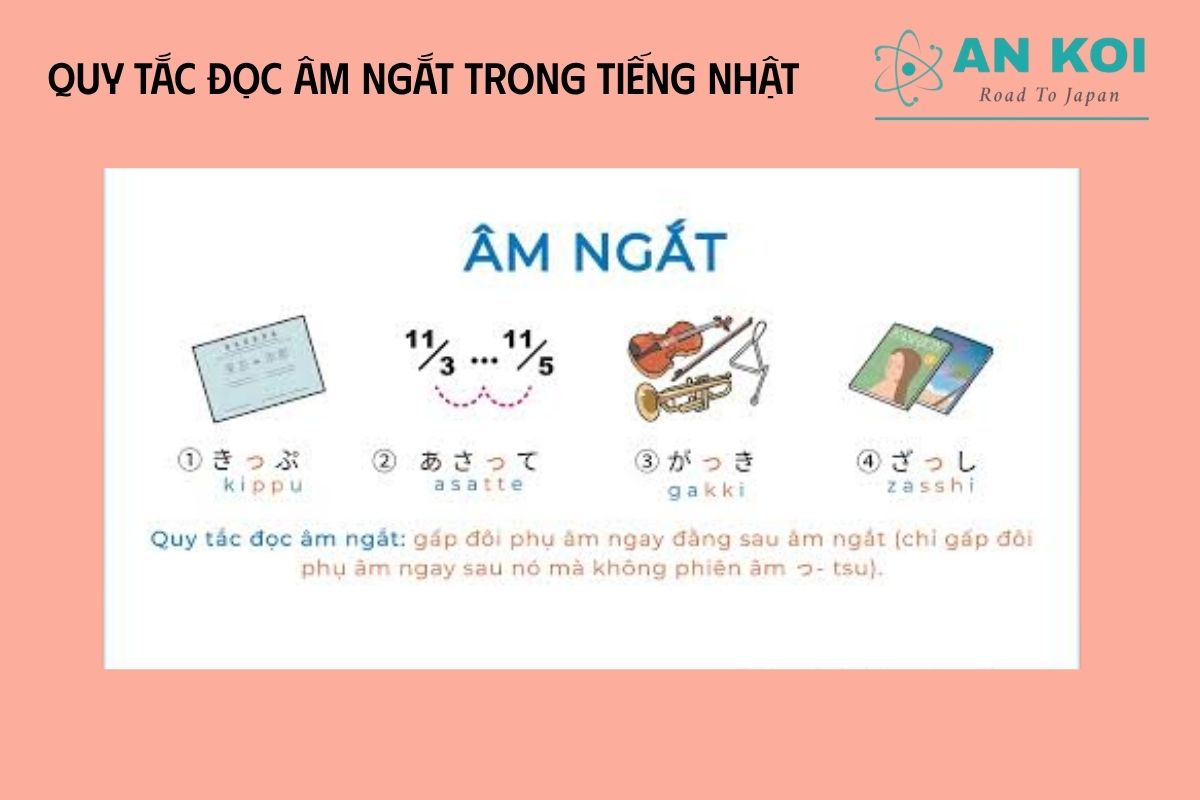
Rules for pronouncing Japanese glottal stop
2. How to pronounce pauses correctly and rhythmically.
To pronounce the Japanese glottal stop with the correct rhythm, divide each word into individual morae and tap your hand once for every mora. When you reach the small っ, prepare your mouth for the following consonant but do not produce any sound during that mora.
For example, the word きっぷ is divided into き・っ・ぷ:
- Mora 1: Pronounce き (ki).
- Mora 2: Close your lips and prepare to pronounce ぷ (pu) without making any sound.
- Mora 3: Clearly pronounce ぷ (pu).
For the word まって (matte), pronounce it in three morae: ま・っ・て. During the second mora, place the tip of your tongue in position for the t sound, then release it to pronounce て (te). When practicing, start slowly by clapping your hands to each mora, then gradually increase your speed and use the words in complete sentences. Recording your own voice is also an effective way to check whether your pause is accurate. Consistent practice will help your Japanese glottal stop sound clear, natural, and fluent rather than forced.
3. Special cases of the Japanese glottal stop
In addition to its common position in the middle of a word, the small っ is also used in several special situations. In conversations, manga, or text messages, the small っ may appear at the end of a sentence to express an abrupt stop in speech, surprise, or strong emotion. For example, a character may say あっ to show sudden realization. In this case, the small っ is not romanized by doubling the following consonant as it is in regular vocabulary.
The Japanese glottal stop can also appear when two word elements are combined. For example: 学 + 校 → がっこう (gakkou). In Katakana loanwords, the small ッ is used to indicate a strong or doubled consonant, such as ベッド (beddo) – bed and バッグ (baggu) – bag. When you encounter unfamiliar words, it is recommended to check a dictionary with audio pronunciation. This allows you to understand the Japanese glottal stop in context rather than relying solely on memorized rules.
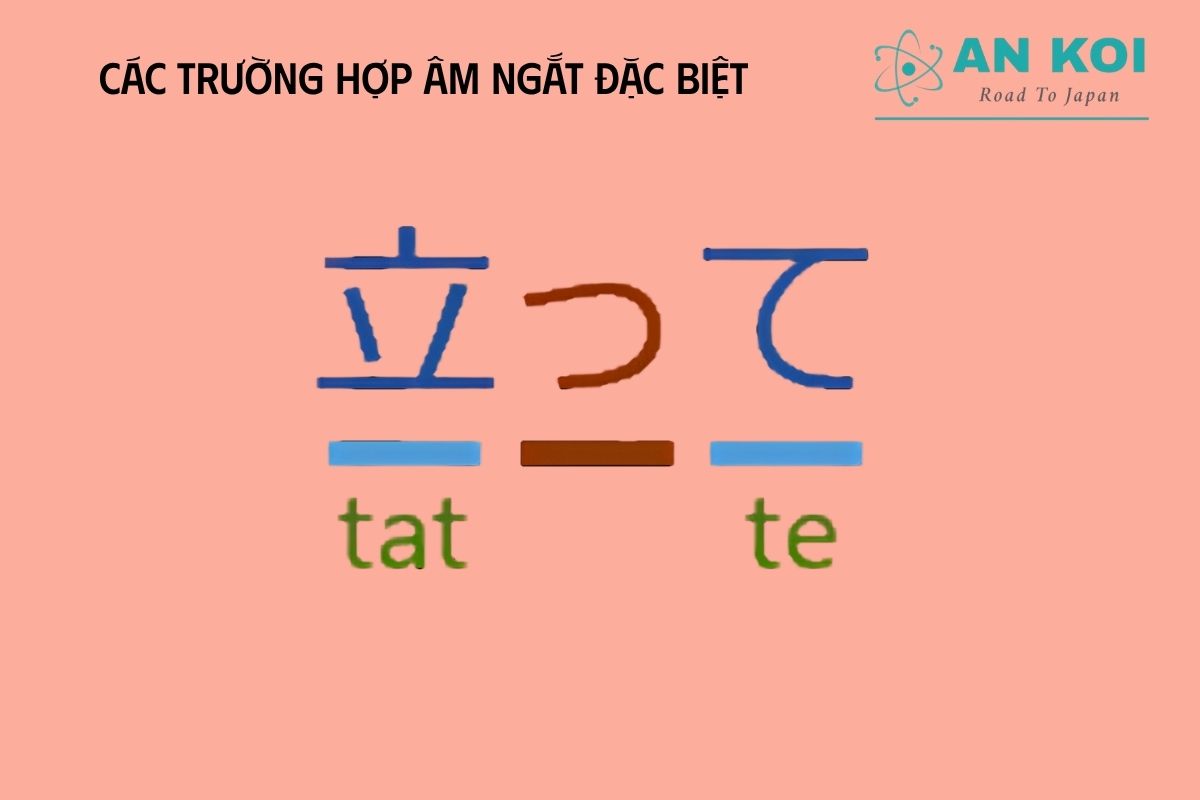
Special cases of Japanese glottal stop
Common mistakes when pronouncing the Japanese glottal stop
Vietnamese learners often struggle with the Japanese glottal stop because they are not yet accustomed to the mora-based rhythm of Japanese. Missing the pause or holding it for too long can completely change a word’s meaning and make it difficult for native speakers to understand.
- Ignore the pause: Many learners pronounce きって (kitte) almost the same as きて (kite) because they ignore the brief pause created by the small っ.The correct way is to divide the word into three morae: き・っ・て and hold silent on the っ beat.
- Confusing consonant clusters with sound fields: When pronouncing がっこう (gakkou), many learners mistakenly lengthen the “a” sound. In reality, the correct pronunciation is to briefly hold the k consonant before continuing with こう, rather than extending the preceding vowel.
- Pronunciation of double consonants is unclear: Some learners pause correctly but fail to prepare their mouth position for the following consonant. As a result, the consonant sounds weak or unnatural.
To correct mistakes, practice with pairs of words, clap along to the rhythm, and record yourself to check. Regular practice will make your Japanese glottal stop clearer, more accurate, and more natural.

Common mistakes when pronouncing Japanese glottal stop
ANKOI helps you master accurate Japanese pronunciation
With more than five years of experience in Japanese language education and study abroad consulting, ANKOI has helped many students build a strong language foundation before beginning their studies in Japan. The training program focuses not only on JLPT preparation but also on practical listening, speaking, and pronunciation skills used in real-life communication.
Reasons to choose ANKOI’s Japanese language program include:
- A structured learning roadmap: Students are assessed before enrollment and receive a personalized study plan based on their study-abroad goals.
- Courses from N5 to N1: The curriculum is organized by proficiency level, allowing learners to build their knowledge step by step.
- Balanced development of all four language skills: Lessons integrate listening, speaking, reading, and writing rather than focusing only on grammar.
- Practical pronunciation training: Teachers provide guidance on long vowels, sokuon, mora rhythm, and the Japanese glottal stop.
- Goal-oriented JLPT preparation: Students complete exercises, practice tests, and receive regular progress evaluations.
- Integrated language and study abroad support: ANKOI also assists with interview preparation, application documents, and communication skills before students travel to Japan.

ANKOI accompanies you in conquering standard Japanese pronunciation
The Japanese glottal stop is one of the fundamental pronunciation concepts that every learner should master from the very beginning. Once you understand how to recognize the small っ, apply the one-mora pause correctly, identify the following consonant, and avoid common pronunciation mistakes, you will be able to pronounce Japanese vocabulary more accurately and reduce misunderstandings in everyday communication. ANKOI is committed to supporting you throughout your Japanese learning journey by helping you refine your pronunciation, strengthen your JLPT foundation, and gain the confidence to communicate naturally in real-life situations.
>> See more: What majors should you study when going to Japan? Top easiest and most in-demand fields to find jobs in – An Koi
Latest Posts


Hashtags
Contact


