


23/03/2026
When mentioning Japan, many people often think of politeness and discipline in communication. One of the clearest symbols of this is the Japanese bow – also known as Ojigi. This is not just a simple greeting action but also an important part of Japanese behavioral culture.
In this article, we will explore the Japanese bow culture, common types of Japanese bow, and how to perform a proper Japanese bow in different situations.
Japanese bow – a distinctive cultural feature of Japanese people
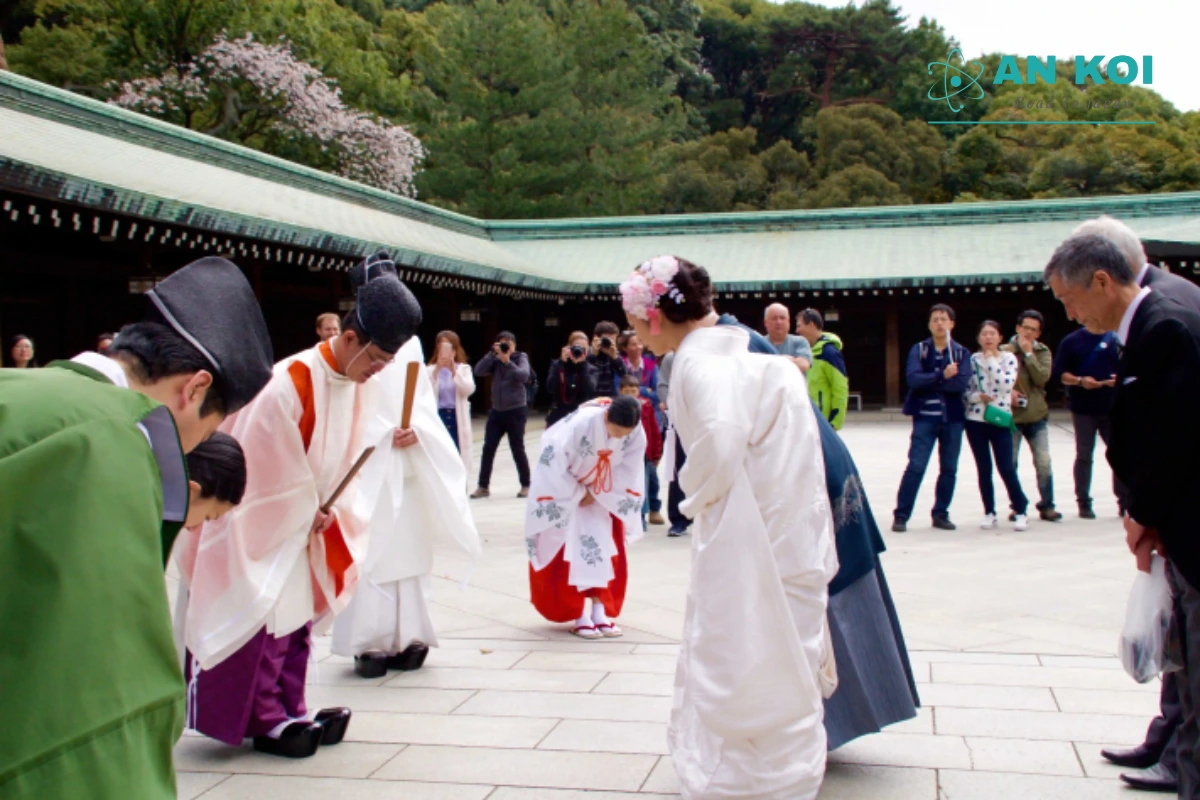
Japanese bow – a distinctive cultural feature of Japanese people
The Japanese bow (Ojigi) is the act of bowing the head or body to show respect in communication. This ritual has existed for hundreds of years and has become an indispensable part of Japanese life.
Japanese people use the Japanese bow in many different situations such as:
- Greeting when meeting
- Expressing gratitude
- Apologizing when making mistakes
- Showing respect to elders or superiors
A special feature of Japanese bow culture is that the depth of the Japanese bow changes depending on the situation and the relationship between the two people. Depending on each situation, the Japanese bow can be a slight bow for casual greetings or a deep bow to show special respect. This helps clearly express the level of respect in communication.
The deep meaning in Japanese bow culture

The deep meaning in Japanese bow culture
In Japanese society, the Japanese bow is not merely a form of politeness but also reflects cultural thinking and human behavior. This action carries many important meanings in daily communication and clearly represents Japanese bow culture.
Some notable meanings of the Japanese bow include:
- Showing respect to others: When meeting elders, superiors, or customers, Japanese people often perform a deeper Japanese bow to express respect and politeness in communication.
- Maintaining harmony in social relationships: Japanese people highly value harmony in the community. Therefore, the Japanese bow is considered a ritual that helps maintain respect and balance in relationships.
- Expressing sincerity in thanks and apologies: When saying thank you or apologizing, Japanese people often combine it with a Japanese bow to convey emotions more sincerely and clearly than words alone.
Therefore, Japanese bow culture is taught from a very early age, even when children begin school. Japanese children are guided on how to perform a proper Japanese bow to form polite communication habits from a young age.
Common types of Japanese bow in communication
In reality, there are many types of Japanese bow. Each type is used in specific situations.
Eshaku – a light Japanese bow in daily communication
Eshaku is a light Japanese bow with an angle of about 15 degrees.
This type of Japanese bow is commonly used in cases such as:
- Greeting acquaintances
- Greeting colleagues
- Greeting when passing by
Eshaku is the most common form of Japanese bow in daily life.
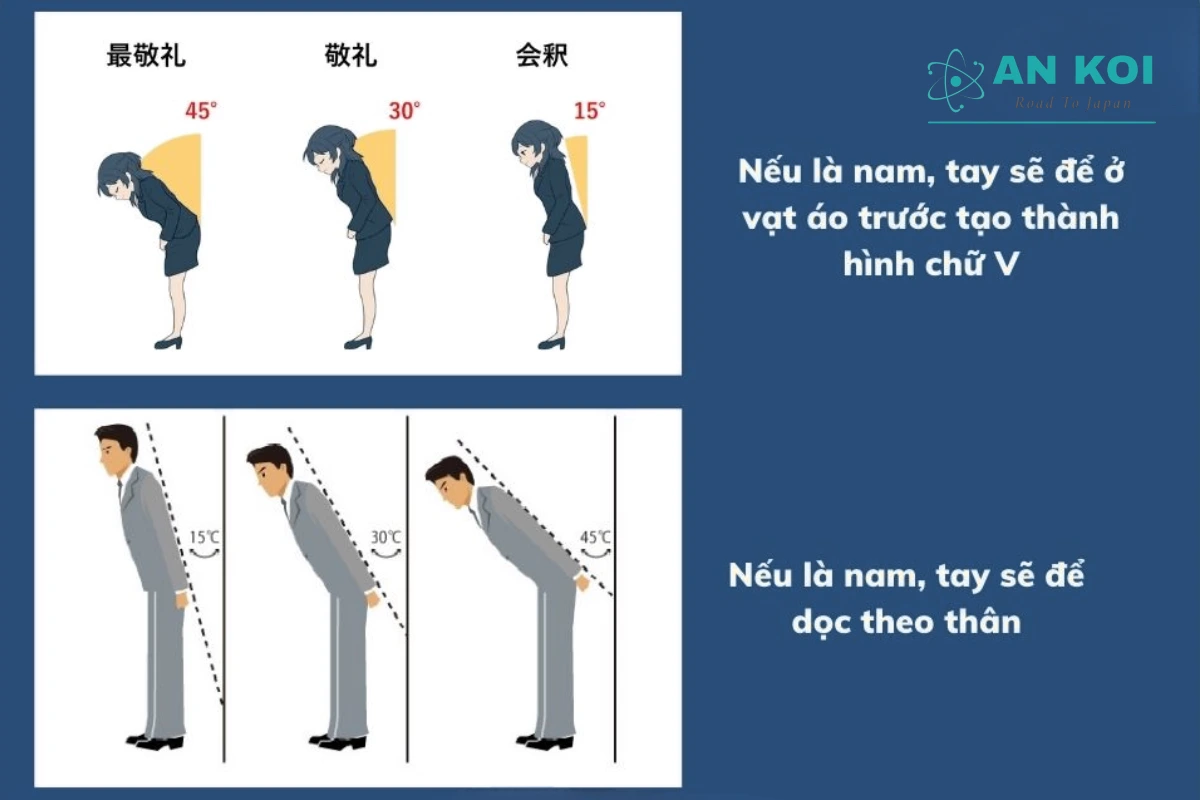
Common types of Japanese bow in communication
Keirei – a formal Japanese bow in business settings
Keirei is a Japanese bow with an angle of about 30 degrees.
This is a Japanese bow commonly seen in workplaces or formal situations such as:
- Greeting customers
- Greeting superiors
- Greeting at the beginning or end of meetings
In Japanese business environments, performing a Japanese bow in the Keirei style is considered standard.
Saikeirei – a deep Japanese bow to show great respect
Saikeirei is the deepest Japanese bow, with an angle of about 45 degrees. This type of Japanese bow is usually used when:
- Showing special respect to people of higher status or elders
- Apologizing in serious situations to express sincerity
- Expressing deep gratitude for significant help or kindness
Among the types of Japanese bow, Saikeirei is considered the most formal. This action shows a very high level of respect and clearly reflects the sophistication of Japanese bow culture.
Guide to performing a proper Japanese bow
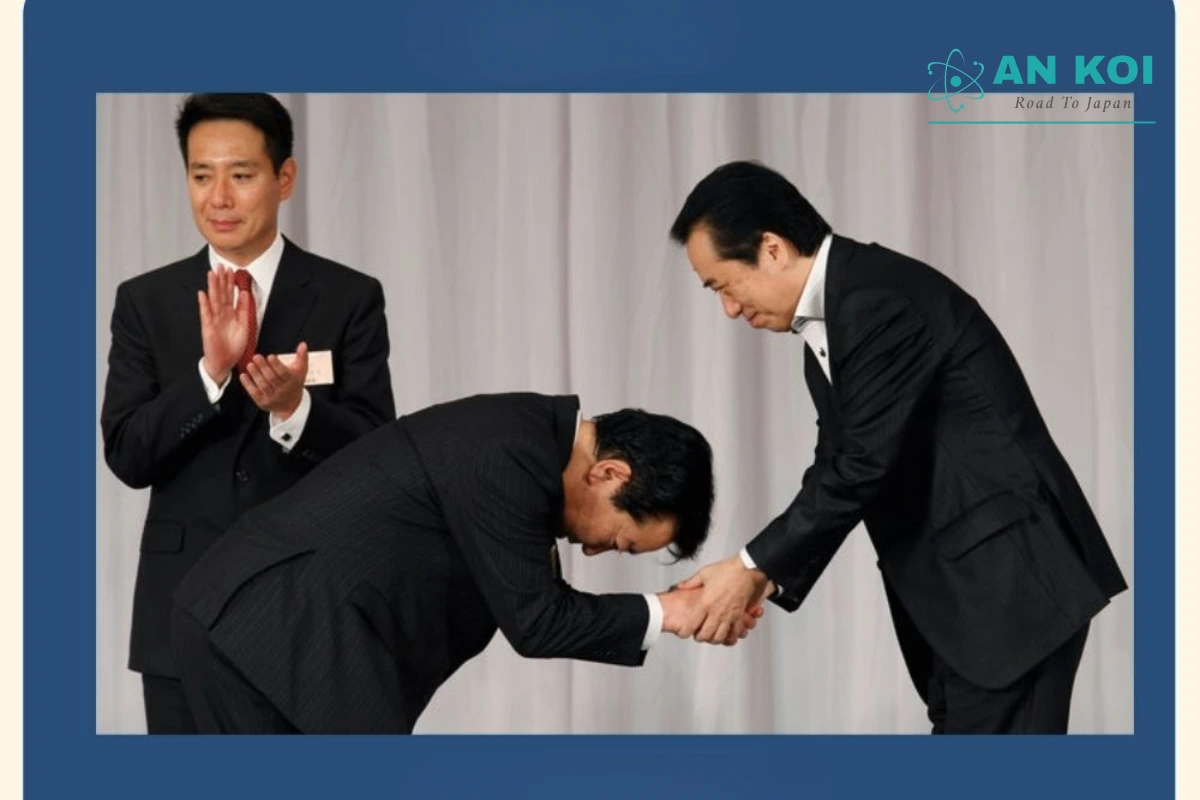
Guide to performing a proper Japanese bow
To perform a proper Japanese bow, you need to pay attention to some basic principles in Japanese bow culture. Performing a correct Japanese bow not only shows politeness but also helps create a good impression in communication.
Some important principles when performing a Japanese bow include:
- Keep your back straight when bowing: When performing a Japanese bow, Japanese people always keep their back straight and bend from the hips. Bending the back or hunching is considered incorrect in Japanese bow etiquette.
- Eyes gently looking downward: In a Japanese bow, the eyes are usually directed slightly downward instead of looking straight at the other person. This shows respect and politeness in communication.
- Place your hands correctly: Hands are also important when performing a Japanese bow:
- Men: place both hands along the sides of the body
- Women: place hands overlapping in front
- Men: place both hands along the sides of the body
- Hold the bowing posture for a few seconds: When performing a Japanese bow, you should not bow too quickly. Typically, Japanese people hold the bow for about 1–2 seconds before straightening up to show formality.
Performing a proper Japanese bow will help you show respect to others and create a good impression when communicating with Japanese people.
Common mistakes when performing a Japanese bow
Although the Japanese bow is a familiar practice, many people still make some mistakes when performing it. These mistakes can make the greeting less formal and not in line with Japanese bow culture.

Common mistakes when performing a Japanese bow
Some common mistakes when performing a Japanese bow include:
- Bowing too quickly: If you bow too quickly and immediately stand up, it will make the Japanese bow seem less formal and not show respect.
- Looking directly at the other person while bowing: In a Japanese bow, the eyes should be gently directed downward. Looking straight at the other person while bowing may be considered impolite.
- Shaking hands while bowing: Handshaking is common in Western communication, while the Japanese bow is a traditional Japanese practice. Therefore, doing both at the same time is generally not encouraged.
- Bowing at the wrong angle in formal situations: In different types of Japanese bow, each situation requires a different angle. For example, when greeting superiors or important clients, bowing too lightly will not show sufficient respect.
Why Japanese language learners should understand Japanese bow culture
For those interested in Japan, understanding Japanese bow culture brings many benefits in communication and daily life. Mastering the Japanese bow not only helps you behave appropriately but also shows respect for local culture.
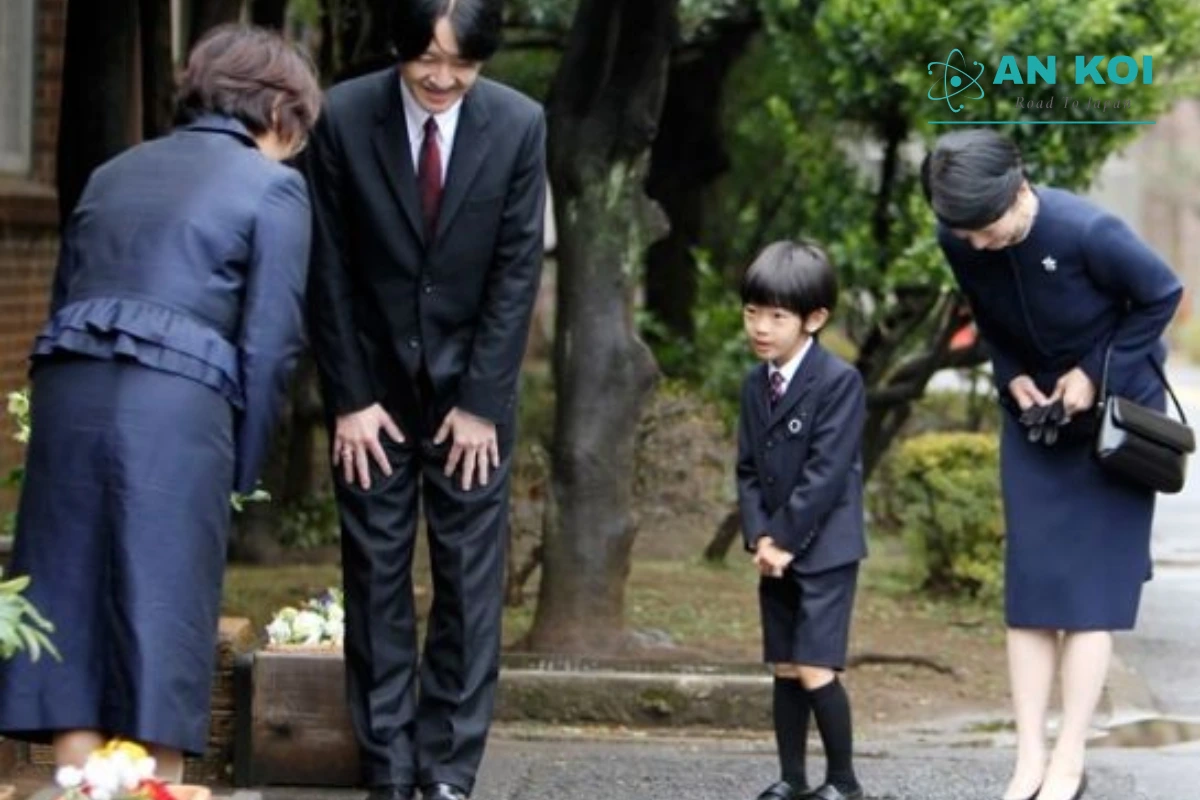
Why Japanese language learners should understand Japanese bow culture
Some benefits of understanding and applying the Japanese bow include:
- Helping you communicate more naturally with Japanese people: When you understand and perform a proper Japanese bow, you can create a good impression from the first meeting.
- Avoiding impolite situations in communication: Understanding the types of Japanese bow helps you know when to bow lightly, formally, or deeply, especially when working or studying in Japan.
- Gaining a deeper understanding of Japanese culture and traditional values: Learning about the Japanese bow is also a way to better understand the mindset, respect, and discipline in Japanese culture.
Japan is not only famous for its rich culture but also an attractive destination for international students. With an advanced education system, modern learning environment, and excellent opportunities for research and development, Japan is an ideal place for personal growth. Students in Japan not only experience a rich culture but also have access to advanced technologies and a high-level academic environment.
If you are looking for opportunities to study in Japan, ANKOI will be a great companion. As a trusted study abroad consulting provider, ANKOI offers professional and dedicated services, including school selection, visa application, and comprehensive support for international students throughout their study journey in Japan. You will receive useful advice to help you easily adapt to life in Japan and enjoy meaningful and rewarding experiences.
- Website: https://ankoi.vn/
- Fanpage:https://www.facebook.com/duhocankoi
- Hotline: 0906 378 027
Latest Posts


Hashtags
Contact


