


15/08/2026
Japanese humble language is one of the areas that can easily confuse Japanese learners because the same action may be expressed differently depending on who you are speaking to and the situation. It is not simply a polite way of speaking; it also reflects the subtlety of Japanese communication culture. So what exactly is Japanese humble language, and how can you use it in a way that is both grammatically correct and natural? Find out with AN KOI.
What is Japanese humble language?
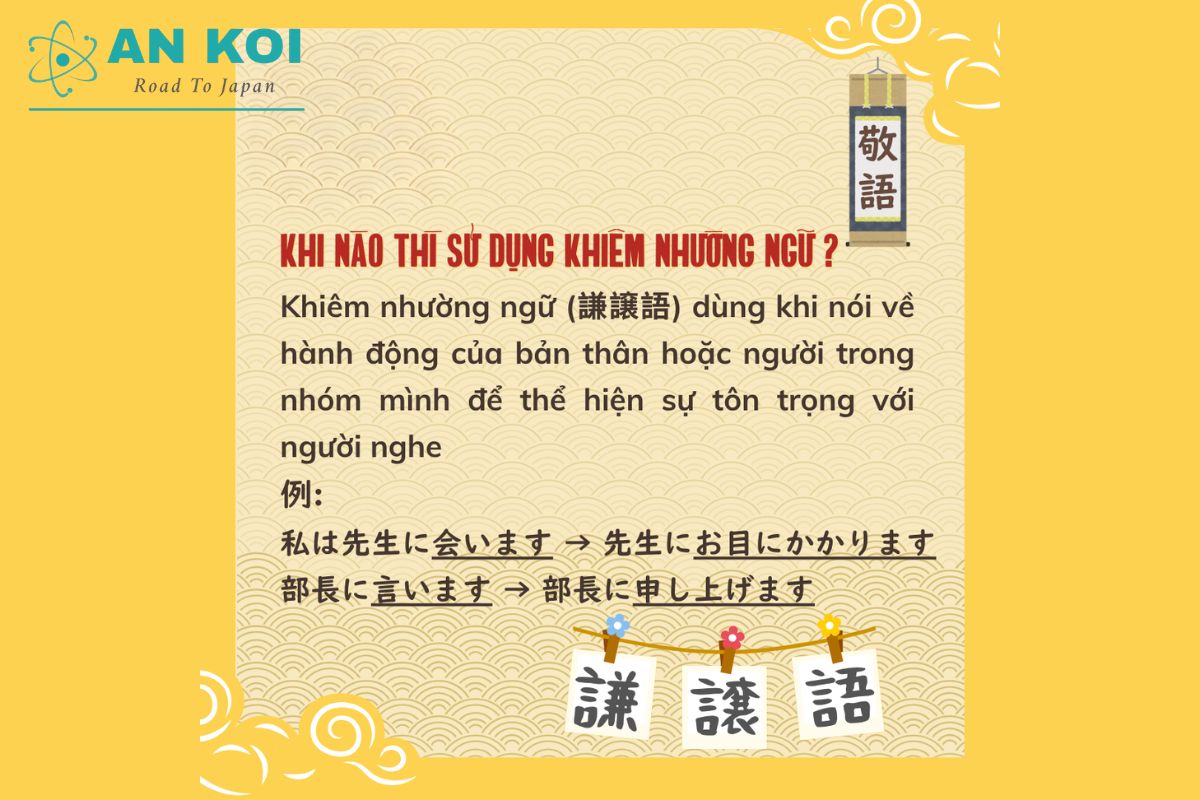
Japanese humble language (謙譲語 – kenjōgo) is a form of keigo used when speakers lower the way they describe their own actions, or the actions of someone in their in-group, to show respect toward the other person. This style is commonly used in situations that require politeness, such as when speaking with superiors, customers, teachers, or older people.

What is Japanese humble language? It is a form of keigo used to humble the speaker’s own actions in order to show respect
By nature, Japanese humble language does not mean putting yourself down in a negative sense. Instead, it is a way of adjusting your expression to reflect the relationship and relative position of the people involved in a conversation. For example, instead of using 行きます (to go) in a formal situation, a speaker may use 伺います to speak humbly about their own action.
In real communication, Japanese humble language plays an important role because it makes speech more polite and culturally appropriate in Japanese. It is especially common in academic settings, workplaces, and situations where differences in status or role matter. Understanding what Japanese humble language is will help learners better understand how Japanese speakers show respect and choose language that fits each relationship.
>> See also:What is Japanese honorific language? How to use sonkeigo correctly from A to Z
Types of Japanese humble language you should know
Japanese humble language can be divided into two main groups: verbs with special humble forms and verbs converted using standard patterns. Understanding these two groups makes it easier to recognize and use Japanese humble language in the right context. Common forms include 参ります, 伺います, いたします, 申し上げます, and 拝見します.
1. Special humble verb forms
An important part of Japanese humble language is the group of verbs with special humble forms. These forms cannot be created simply by applying a general formula, so learners should memorize them in pairs to avoid confusion when using Japanese humble language in sentences. This is also a common area of keigo study from around N4 level onward.
Special humble verb forms should be memorized in pairs to avoid confusion when using them
Some typical verbs include:
- 行く・来る → 参る: the humble form used when speaking about going or coming.
- 聞く・訪ねる → 伺う: used humbly for asking, listening, or visiting, depending on the context.
- 言う → 申す・申し上げる: used humbly when speaking or stating something.
- 見る → 拝見する: the humble form used when talking about looking at or viewing something.
- する → いたす: used to humble an action performed by the speaker.
When studying these verbs, place each one in a practical sentence instead of memorizing only a conversion chart.

Mastering Japanese humble language helps learners use each verb in real sentences instead of simply memorizing conversion tables
2. How to convert verbs into humble forms
In addition to special verbs, Japanese humble language can also be formed using certain patterns. A common structure is お + the ます-stem of a verb + します / いたします. However, learners should not apply this pattern mechanically to every verb; first check whether the verb already has a special humble form.
Examples:
- 待ちます → お待ちします: I will wait.
- 手伝います → お手伝いします: I will assist you.
- 説明します → ご説明します: I will explain.
This pattern allows learners to expand their Japanese humble language vocabulary without memorizing too many separate forms. However, when a verb already has an established special keigo form, it is better to use the standard form rather than create a new expression mechanically.
3. The お + V-ます + します and ご + N + します patterns
The two structures お + V-ます + します and ご + N + します are important patterns in Japanese humble language. With suitable verbs, お is placed before the verb stem after removing ます, followed by します or いたします. For many Sino-Japanese words, ご is commonly placed before a verbal noun.
Examples:
- お待ちします: I will wait.
- お伝えします: I will pass the message on.
- ご案内します: I will guide you.
- ご説明します: I will explain.
At N4 level, learners of Japanese humble language should focus first on recognizing the structure and identifying the subject of the action before moving on to more advanced variations. Most importantly, the pattern must suit both the verb and the context; お or ご should not be added mechanically.

The お + V-ます + します and ご + N + します structures are important patterns when learning keigo
Practical examples that are easy for beginners to remember
To remember Japanese humble language, beginners should connect each pattern with a specific situation. This makes it easier to distinguish the subject and purpose of an expression than simply memorizing vocabulary lists. Once you understand what Japanese humble language is, you can begin with patterns commonly used in classrooms and workplaces.
Examples:
明日、会社に伺います。
→ I will visit the company tomorrow.
資料を拝見します。
→ I will take a look at the materials.
私からご説明いたします。
→ Allow me to explain.
後ほどお電話いたします。
→ I will call you back later.
When practicing, identify three things: who performs the action, toward whom the action is directed, and whether the situation requires a formal tone. This is a practical and easy-to-apply way to learn Japanese humble language.
>> See also:What are Japanese geminate consonants? Pronunciation rules for beginners
N2-level Japanese humble language and advanced usage
At N2 level, learners of Japanese humble language need to do more than memorize verb forms; they must also choose expressions that fit each situation. Advanced humble language is especially common in formal conversation, written communication, and workplace settings. When studying this area, pay attention to special verbs, contextual use, and the nuance of each expression. These are also the points that distinguish someone who only remembers formulas from someone who can use N2-level Japanese humble language accurately and naturally.
Special verbs commonly encountered at N2 level
At N2 level, learners encounter many special humble verbs in formal conversations and JLPT questions. These words should be learned in context because some verbs can carry different meanings depending on how they are used. Mastering this group also helps learners use Japanese humble language more naturally in communication.
Some important examples include:
- 参る: the humble form of 行く・来る.
- 伺う: the humble form of 行く・聞く・訪ねる, depending on context.
- 申す: the humble form of 言う.
- いたす: the humble form of する.
- 拝見する: the humble form of 見る.
- 存じる: a humble expression related to 知る・思う in certain contexts.
When reviewing N2-level Japanese humble language, learn complete example sentences rather than only memorizing Vietnamese or English meanings. This makes it easier to recognize the correct nuance in multiple-choice questions.
How to use humble language in conversation and writing
The use of Japanese humble language can vary in formality between spoken and written communication. In face-to-face conversations, speakers usually choose expressions according to the relationship between the two sides. In emails or business documents, humble language often appears together with more formal opening and closing expressions.
Example in a workplace conversation:
後ほど資料をお送りします。
→ I will send the materials later.
In a more formal style:
後ほど資料をお送りいたします。
→ I will send the materials to you later.
At N2 level, learners should pay attention to the entire sentence rather than isolating each verb. An expression may be grammatically correct but still sound unnatural if it does not suit the situation. For this reason, practice Japanese humble language through emails, conversations, and realistic workplace scenarios.

Learners encounter many special humble verbs in formal conversations and JLPT questions
Differences in nuance between humble expressions
Not every form of Japanese humble language carries the same degree of formality. Some expressions suit ordinary polite communication, while others are more common in professional or highly formal writing. This is an important distinction for N2 learners in both exam practice and real communication. For example, します is already polite, whereas いたします often sounds more humble and formal. Likewise, 言います and 申します should not be chosen only because both mean “to say”; you also need to consider who performs the action and who is being addressed.
You can remember the distinction using these principles:
- Identify the subject of the action first.
- Identify the person toward whom respect should be shown.
- Choose a level of formality that suits the situation.
Understanding these nuances helps Japanese humble language sound natural instead of turning it into a set of memorized formulas.
>> See also:How many Kanji characters are there in Japanese? Latest 2026 update
How to use Japanese humble language in different situations
The way Japanese humble language is used changes depending on the person you are speaking to and the communication setting. Learners need to identify who performs the action and select an appropriate level of formality. In practice, humble language is often used when speaking with superiors, customers, business partners, or when describing your own actions. Understanding each situation will help you use Japanese humble language more accurately and naturally.
1. When speaking with superiors and older people
When speaking with superiors or older people, Japanese humble language helps the speaker show respect to the other person. However, not every part of a sentence needs to be converted into keigo. The key is to determine who performs the action and then choose the appropriate expression. This is a fundamental principle of Japanese humble language and is also commonly tested at N4 level.
For example, when speaking to a teacher:
先生の研究室に伺います。
→ I will come to your office.
Here, 伺います is used for the speaker’s action of “going/coming.” If the speaker is referring to an action performed by the teacher, Japanese honorific language (sonkeigo) should be considered instead of Japanese humble language.
2. When communicating with customers and business partners
In business settings, Japanese humble language is used frequently to show a professional attitude toward customers and business partners. Verbs such as 伺う, 申し上げる, いたす, and 拝見する commonly appear in these contexts. N2 learners should pay particular attention to workplace situations because the language used is often more formal than in ordinary communication.
Examples:
資料を拝見いたしました。
→ I have reviewed the materials.
こちらからご連絡いたします。
→ We will contact you.
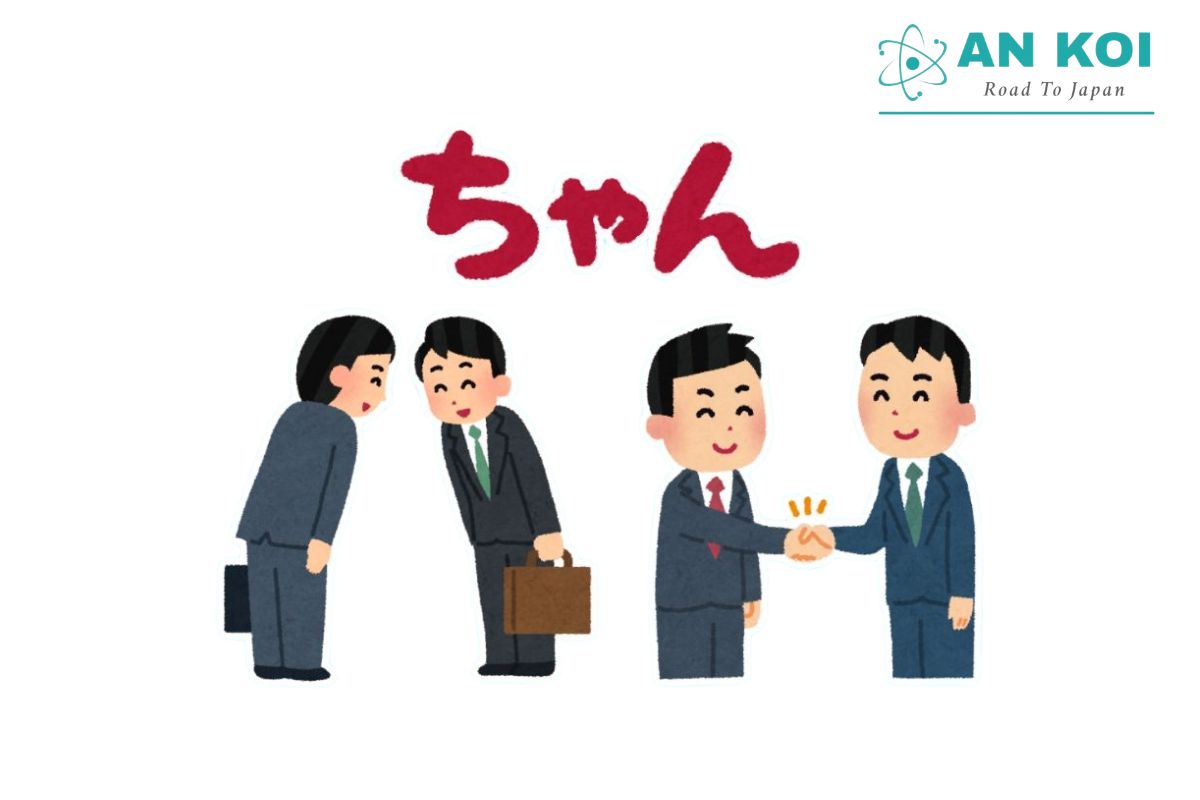
Japanese humble language is frequently used when communicating with customers and business partners in professional settings
When using humble language, do not try to make a sentence “the more honorific, the better.” An overly formal sentence or unnecessary layers of keigo can make the expression sound unnatural. Using Japanese humble language correctly means choosing an appropriate level of politeness, not using as much keigo as possible.
3. When describing your own actions
An important principle of Japanese humble language is that it is used when an action belongs to the speaker or the speaker’s in-group and respect needs to be shown to the other person. Therefore, when describing your own actions, first identify who is performing the action and then choose the appropriate verb form. This way of thinking is especially useful when learning N4-level Japanese humble language and remains important as you advance to N2.
Examples:
私が説明いたします。
→ Allow me to explain.
明日、そちらへ伺います。
→ I will come there tomorrow.
後で資料をお送りします。
→ I will send the materials later.
Instead of memorizing each sentence separately, practice by asking yourself: “What am I doing?”, “Who am I speaking to?”, and “What level of politeness do I need?” This is a more accurate and natural way to apply Japanese humble language.
Using Japanese humble language correctly when describing your own actions makes your speech sound natural and appropriate to the situation
Mastering Japanese humble language is not only about memorizing special verb forms. More importantly, you need to understand who performs the action, who you are communicating with, and the context in which the expression is used. Once you can apply this knowledge to specific situations, it becomes easier to distinguish humble language from honorific language and choose expressions appropriately.
If you want to build a solid foundation in Japanese or prepare for the JLPT, you can explore AN KOI’s Japanese language training program. AN KOI offers a learning pathway from N5 to N1, combining language knowledge, exam preparation, and communication practice to suit different learning goals.
Latest Posts


Hashtags
Contact


