


19/08/2026
Kimono and Yukata are both closely associated with Japanese culture, yet not everyone can easily tell these two traditional garments apart. One is formal and elaborate, while the other is light, comfortable, and especially popular in summer. So how are Kimono and Yukata different, and which one should you wear to a festival or while traveling in Japan? Understanding the characteristics of each with AN KOI will help you choose the right outfit and enjoy a more complete cultural experience.
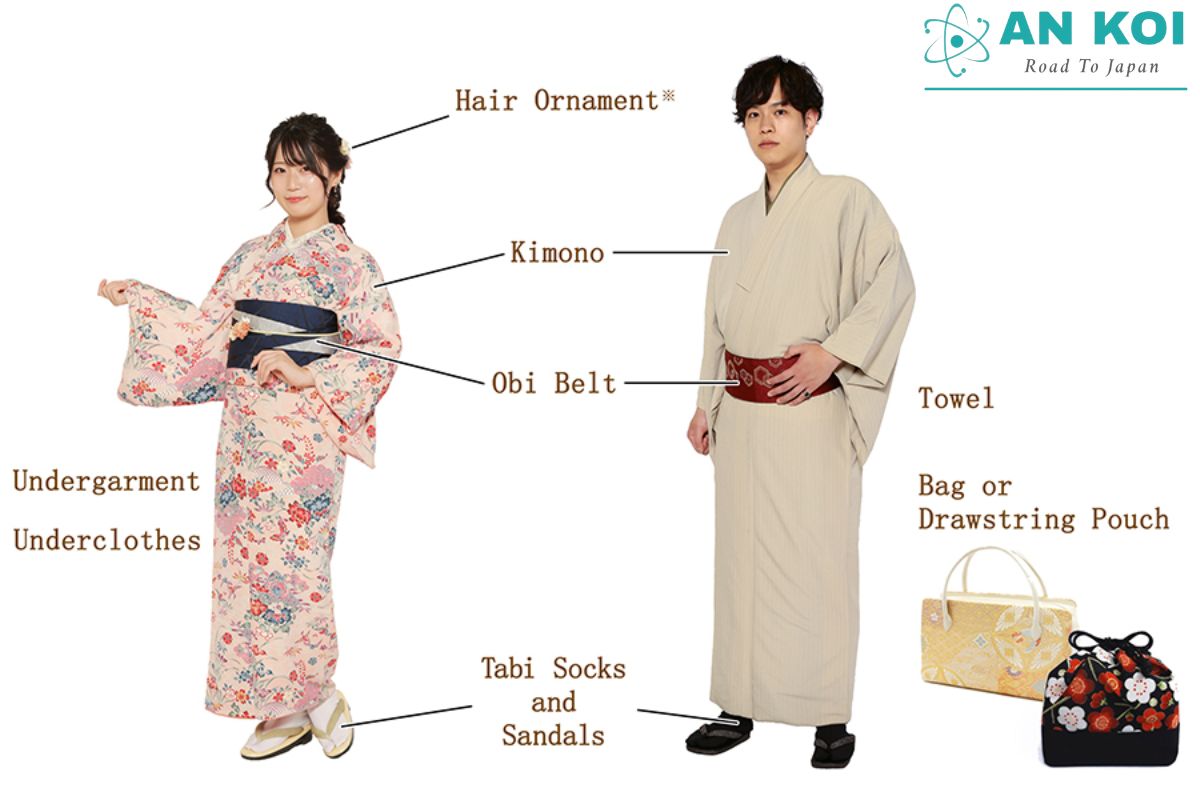
Kimono and Yukata are two distinctive forms of traditional Japanese clothing
What are Kimono and Yukata? Understanding their origins
Kimono and Yukata are both well-known traditional Japanese garments, but they differ in history, materials, and purpose. To understand how Kimono and Yukata are different, it is important to first know the basic features of each. In Japanese culture, Kimono and Yukata are more than clothing; they also reflect the occasion, season, and level of formality of the wearer.
What is Kimono and what types are there?
What is Kimono? It is a general term for traditional Japanese clothing, typically designed like a robe with the two front panels crossed over one another and secured with an Obi. When comparing Kimono and Yukata, Kimono is often made from silk, wool, or other fabrics selected to suit the season.
Kimono comes in many types for different occasions, including weddings, coming-of-age ceremonies, parties, and everyday wear. Some styles feature long sleeves and intricate patterns, while men’s Kimono is generally more understated. For this reason, Kimono and Yukata should not be distinguished by color alone.
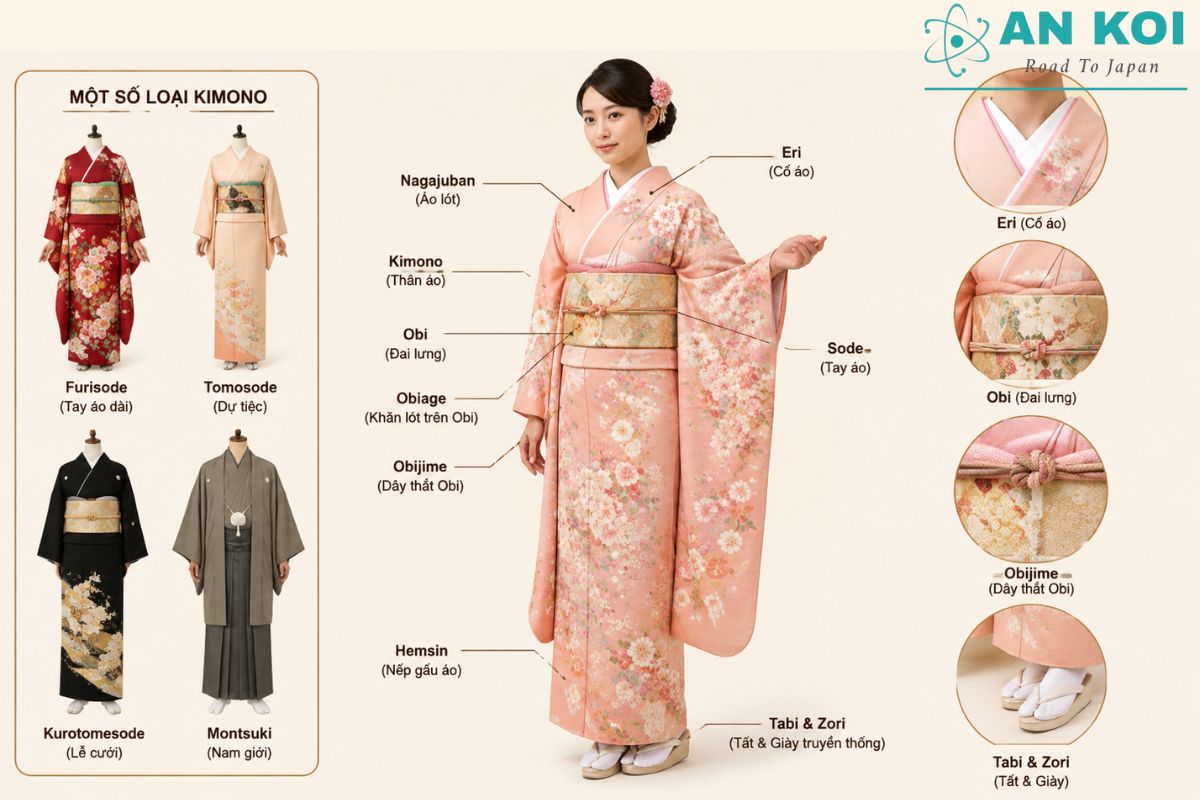
Some common types of Kimono and the basic elements of the garment.
What is Yukata and when is it usually worn?
What is Yukata? Yukata is a lightweight form of traditional Japanese clothing, usually made from cotton and worn without many inner layers. When comparing Kimono and Yukata, Yukata has a simpler design, is easier to wear, and suits hot weather. This is also why Kimono and Yukata are often seen during summer activities in Japan.
Yukata is especially popular at fireworks festivals, summer festivals, and hot-spring resorts. Travelers also often choose Yukata when they want to experience Japanese culture without wearing an overly elaborate outfit.
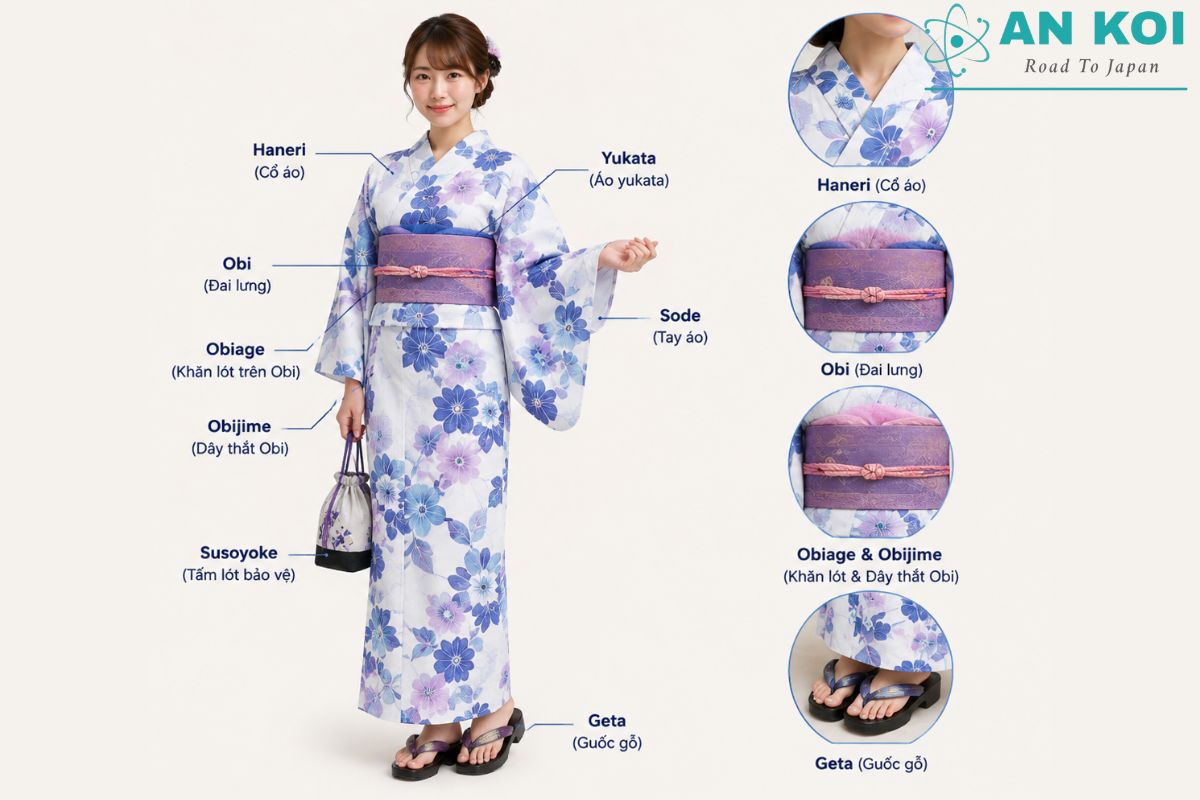
Yukata has a lightweight, layered-down design paired with a simple Obi and Geta
>> See also:What is Omotenashi? The art of Japanese hospitality
How are Kimono and Yukata different?
So how are Kimono and Yukata different? You can tell them apart by their materials, number of layers, design, accessories, and the occasions for which they are worn. Overall, Kimono is usually more elaborate and formal, while Yukata is lighter, simpler, and better suited to summer activities.
|
Criteria |
Kimono |
Yukata |
|
Material |
Usually silk or other structured fabrics, with thickness varying by type. |
Mainly cotton or other light, breathable fabrics suited to hot weather. |
|
Layers |
Usually worn with undergarments and several supporting layers, together with Tabi socks. |
Usually worn with fewer layers, making it easier and more comfortable to put on. |
|
Design |
Varied styles with different sleeve lengths and structures depending on gender, age, and occasion. |
Simpler design, usually with shorter sleeves and fewer structural layers. |
|
Colors & patterns |
Patterns are often refined and intricate and may reflect the season, social status, or event. |
Colors are often bright, with common motifs such as flowers, plants, fireworks, and summer imagery. |
|
Obi |
The Obi is usually wider, more elaborate, and tied in more complex styles. |
The Obi is simpler, easier to tie, and suits a more relaxed style. |
|
Accessories |
May be paired with accessories such as Tabi, Zori, bags, and decorative items. |
Usually paired with Geta, a small bag, and simple accessories. |
|
Formality |
Suitable for weddings, coming-of-age ceremonies, rituals, and other important events. |
More casual and relaxed, and commonly worn at summer festivals. |
|
When worn |
Can be worn throughout the year depending on the material, style, and occasion. |
Especially popular in summer because of its light, breathable fabric. |
|
Difficulty of dressing |
Requires several preparation steps and often assistance from another person. |
Simpler to put on, making it suitable for people who want to try traditional clothing on their own. |
In short, if you are trying to remember how Kimono and Yukata differ, keep this simple rule in mind: Kimono = formal, layered, and elaborate; Yukata = light, simple, comfortable, and mainly associated with summer.
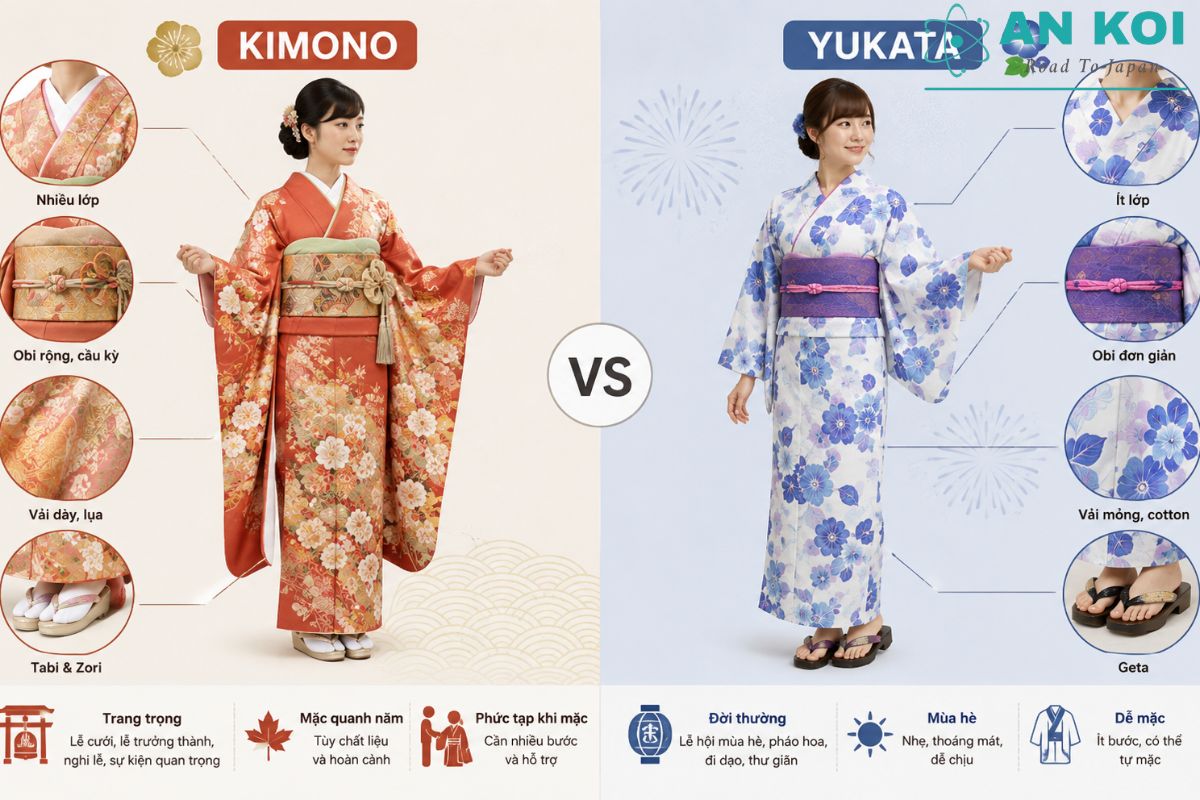
Kimono and Yukata differ in material, number of layers, Obi, and level of formality
When should you wear Kimono and Yukata in Japan?
The choice between Kimono and Yukata should depend on the location, season, and nature of the event. Traditional clothing is not automatically suitable for every situation. Understanding how Kimono and Yukata differ will help you avoid choosing the wrong outfit when taking part in cultural activities in Japan.
With Kimono and Yukata, the simple rule is that Kimono suits formal occasions, while Yukata is better for summer activities. If you are traveling in Japan, you can also choose based on the experience you want rather than focusing only on appearance.
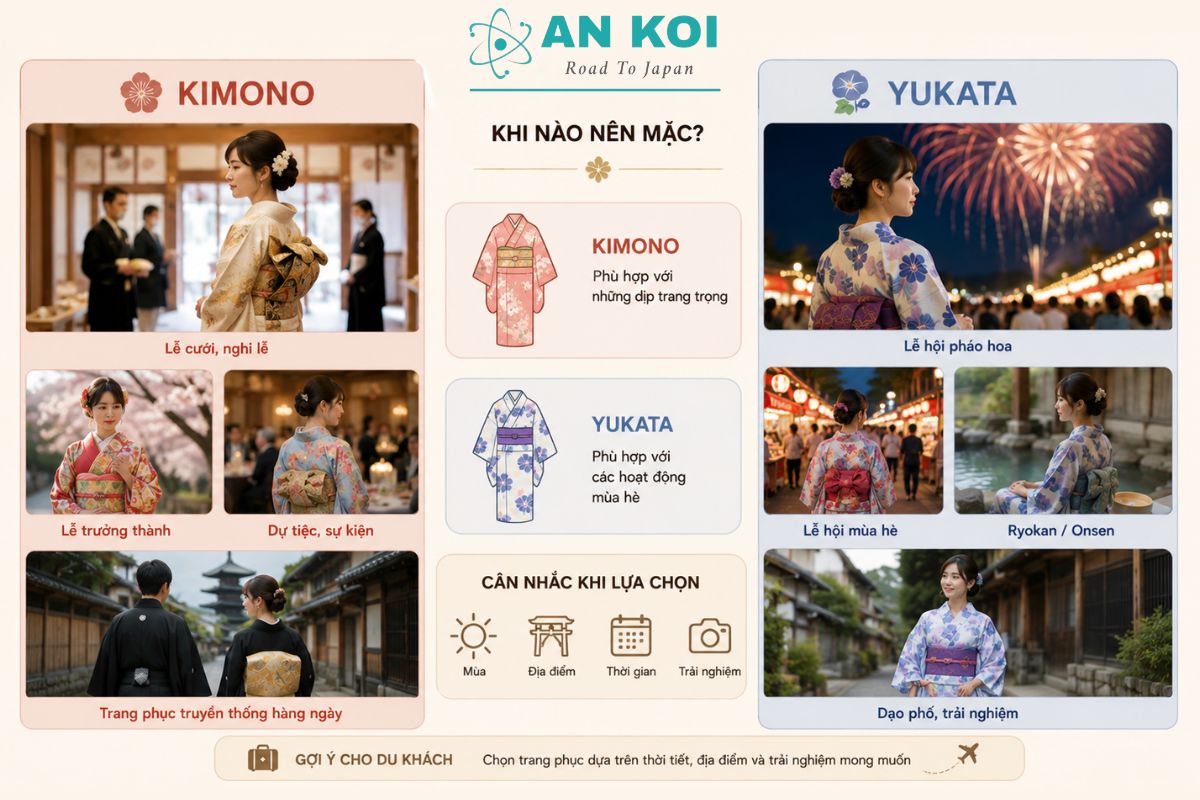
Kimono and Yukata suit different occasions and seasons
Suitable attire for weddings and ceremonies
For formal occasions, Kimono is a more appropriate choice than Yukata. Depending on the event, age, and role of the wearer, Japanese people may choose different types of Kimono. For example, the clothing worn at a wedding follows different conventions from garments used in everyday life.
If you are learning how Kimono and Yukata differ, remember the importance of formality. Yukata is generally not worn as the main attire for important ceremonies. Therefore, when attending a wedding or traditional event, choosing the right type of Kimono not only helps you dress appropriately but also shows respect for Japanese culture.
Yukata at summer festivals and fireworks events
While Kimono is associated with formality, Yukata is closely tied to the atmosphere of Japanese summer. This is when you are most likely to see people wearing Yukata at festivals, fireworks displays, or while strolling through traditional streets. What is Yukata in this context? Simply put, it is a light, breathable traditional garment suited to hot weather. When comparing Kimono and Yukata, Yukata clearly stands out for comfort and practicality. Common occasions for wearing Yukata include:
- Fireworks festivals: Yukata creates one of the most iconic images of summer in Japan.
- Summer festivals: Ideal for strolling around, enjoying street food, and taking part in festival games.
- Ryokan or Onsen: Yukata is often worn as relaxed clothing after bathing.
Which one should travelers choose?
For travelers, the choice between Kimono and Yukata depends on the experience you want. If you plan to take photos at temples, shrines, or historic districts, or want a more traditional cultural experience, Kimono can create a more formal and striking look.
On the other hand, if you visit Japan in summer or attend a festival, Yukata is usually more convenient. Once you understand how Kimono and Yukata differ, you can consider the weather, how long you will wear the outfit, and how much you expect to move around. If you are still unsure what Yukata is, it is often the better choice for a relaxed summer experience.
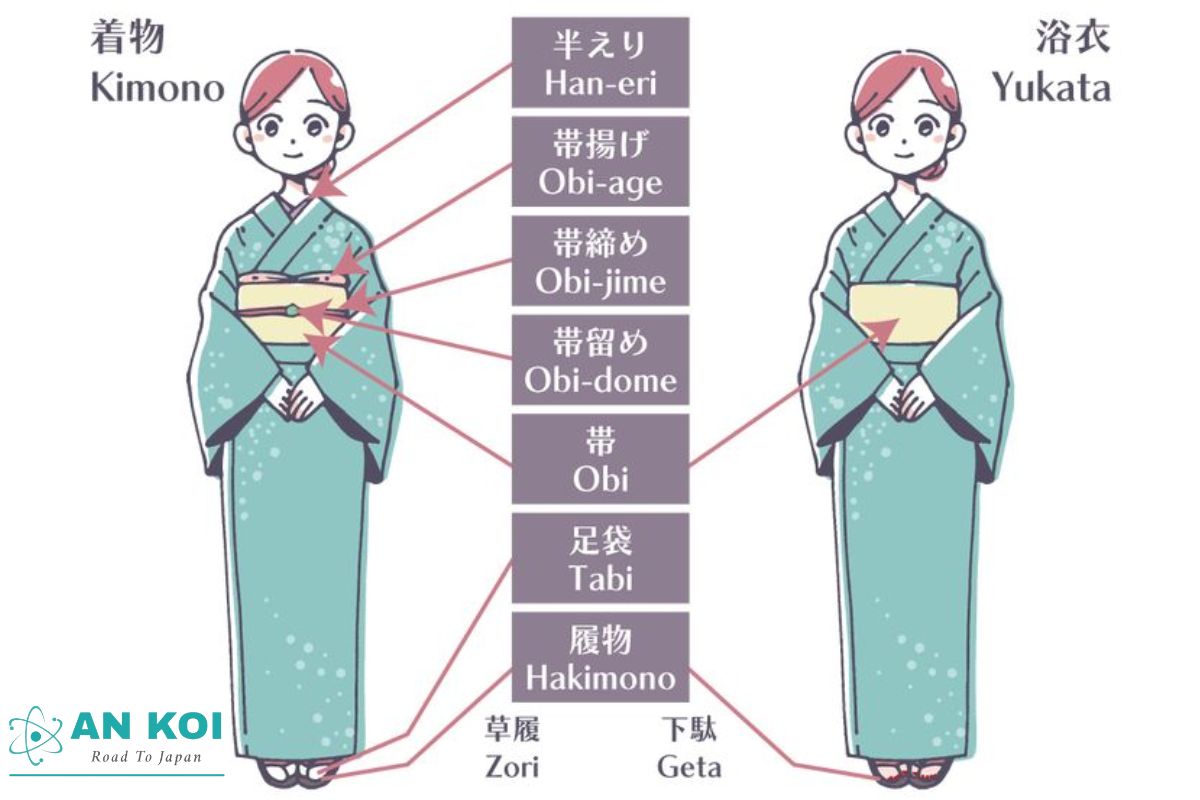
Kimono and Yukata are usually chosen according to formal occasions or summer activities.
>> See also:Origami art: A thousand-year journey from paper to art
How to tell Kimono and Yukata apart in 1 minute
You do not need in-depth knowledge of Japanese culture to distinguish Kimono and Yukata. A few easy-to-observe details are usually enough. Instead of trying to memorize too much, check them in this order: collar → fabric → sleeves → Obi and accessories. This method is especially useful when renting traditional clothing for photos or a cultural experience.
- Step 1 – Look at the collar:
If you see several layers and a more elaborate collar arrangement, it is most likely a Kimono. Yukata usually has a simpler neckline and does not require many clothing layers. - Step 2 – Feel the fabric:
Kimono comes in a wider range of materials and structures, while Yukata is usually lightweight, breathable, and often recognizably cotton. However, this should only be used as a reference because modern garments come in many variations. - Step 3 – Look at the Obi and accessories:
A wide Obi with an elaborate knot and multiple accessories is more commonly paired with Kimono. Yukata usually uses a simpler Obi together with Geta or other lightweight accessories.
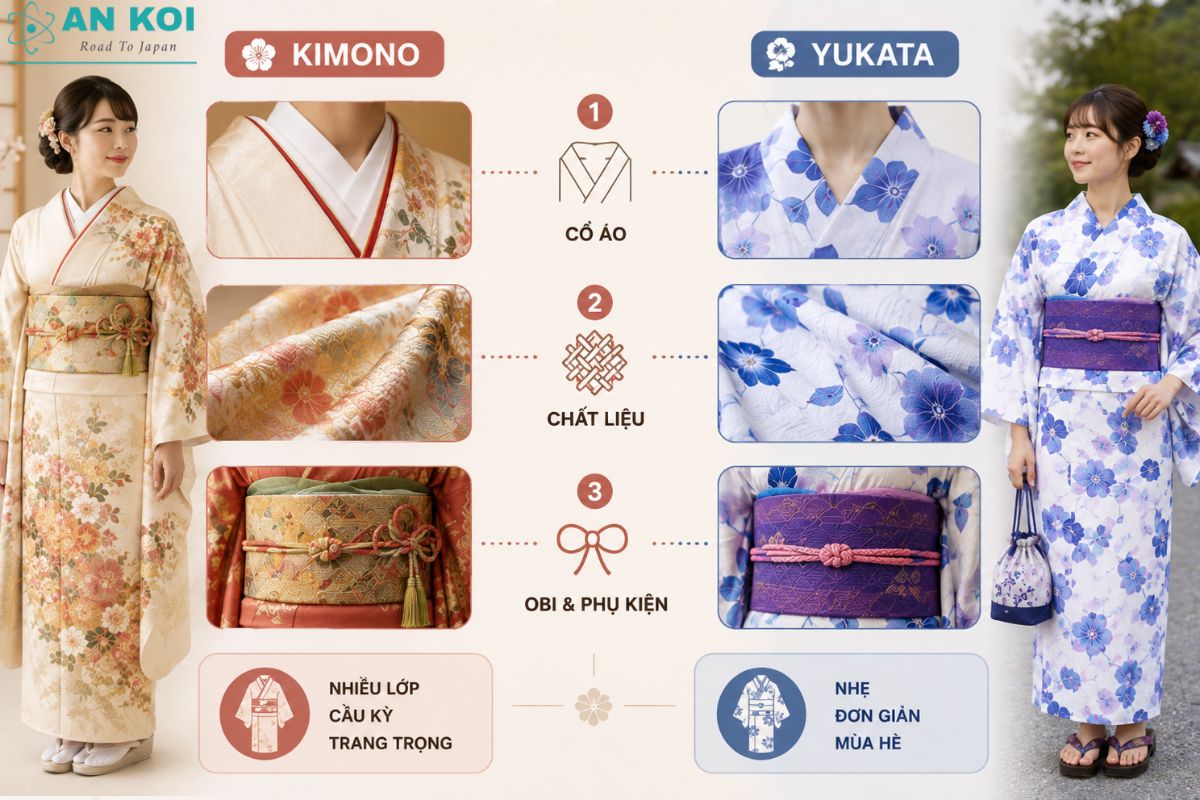
Accessories can help you distinguish Kimono and Yukata when viewing them in person.
Quick way to remember:
- Kimono = more layers + elaborate + formal
- Yukata = light + simple + summer
So, if you need to tell how Kimono and Yukata differ in just a few seconds, do not rely only on colors or patterns. Look at the outfit as a whole, especially the collar, layers, fabric, and Obi. These are the most practical and easy-to-use clues when you see the two garments in person.
Tips for renting Kimono and Yukata in Japan
Renting Kimono and Yukata is a practical option if you want to experience Japanese culture without buying the clothing. Before booking, decide on the rental duration, photo location, and any included services such as hairstyling, makeup, or accessories. Understanding how Kimono and Yukata differ also helps you choose the right garment for the season and purpose.
- Location and rental timing: Choose shops that clearly list prices, available styles, and sizes. During peak seasons, booking in advance gives you more options and helps you manage your schedule.
- Check before pickup: Confirm the condition and size of the garment, as well as the Obi, Geta, and accessories included in the package. Also ask about the return time and rules for stains or damage.
- Costs and surcharges: In addition to the rental price for Kimono and Yukata, some services may charge extra for hairstyling, makeup, special accessories, or extended rental time. Ask for the total cost before booking to avoid unexpected fees.
If you are still unsure what Yukata is, ask the staff about the fabric, how it is worn, and the situations in which it is appropriate. For Kimono, choose a package that includes dressing assistance if this is your first time wearing one.
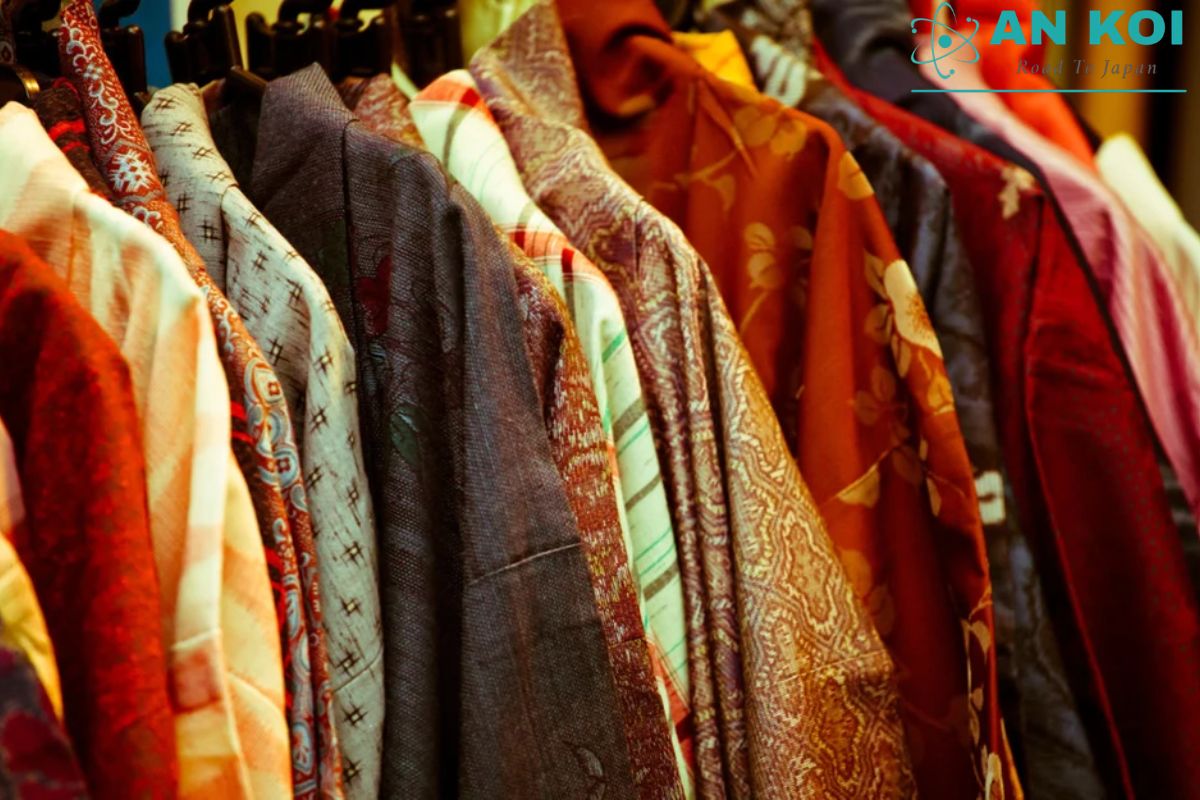
Kimono and Yukata at a rental shop in Japan
Kimono and Yukata each hold their own place in Japanese culture and suit different occasions. Kimono stands out for its formality and elaborate styling, while Yukata is known for being light and practical, especially during summer activities. Once you understand how Kimono and Yukata differ, it becomes much easier to choose the right outfit for the weather, location, and experience you want.
Whichever one you choose, wearing it correctly and respecting the cultural context will make your time in Japan more meaningful. Follow our Japanese culture news for more interesting stories about Japan, its culture, and its people.
Latest Posts


Hashtags
Contact


