


06/08/2026
If you are preparing to study, work, or live in Japan for an extended period, you need to understand What is a Residence Card and the role this document plays. It is an important form of identification that confirms a foreign resident’s identity, residence status, and period of stay in Japan. Read the guide below from AN KOI to learn what information appears on the card, who receives one, when it is issued, how it must be used, and when a replacement card is required.
What is a Residence Card?
What is a Residence Card is a common question among people preparing to study, work, or live in Japan long term. Put simply, this is the common Vietnamese way of referring to Japan’s Residence Card (在留カード – Zairyu Card), a document issued to foreign nationals who are medium- to long-term residents of Japan. The card contains important information about the holder’s identity and residence status.
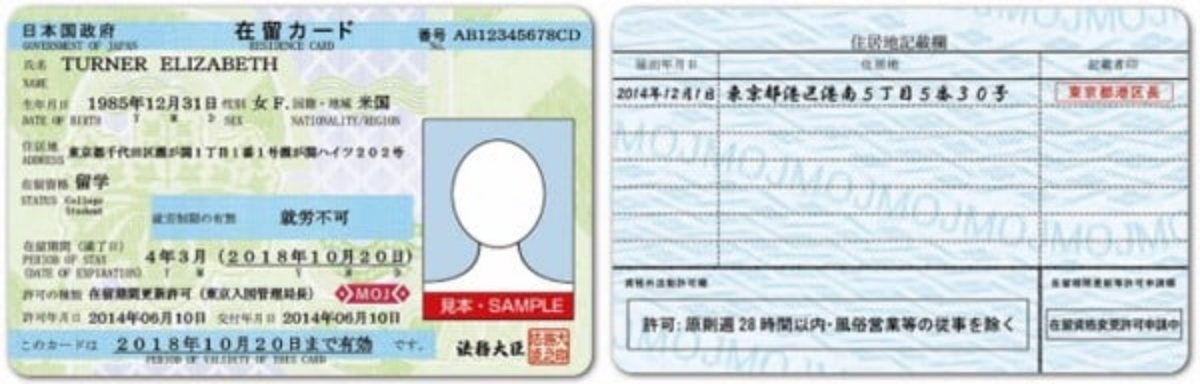
What is a Residence Card? It is the identification card issued to foreign nationals who are medium- to long-term residents of Japan
When learning What is a Residence Card, you should also distinguish the residence card from a visa and from residence status. A visa mainly relates to entry into Japan, while the residence card records a foreign national’s residence information after permission to stay in Japan has been granted. Therefore, understanding What is a Residence Card is not only about identifying a document; it is directly connected to studying, working, and living legally in Japan.
>> See also:What is a residence card called in Japanese? A detailed guide for newcomers to Japan
What is a Japan residence card used for?
After understanding What is a Residence Card, you should also know how this document is used in everyday life. A Japan residence card is tied to a foreign national’s residence information and is used in many situations where official identification or residence status must be confirmed. Below are the key functions you should understand.
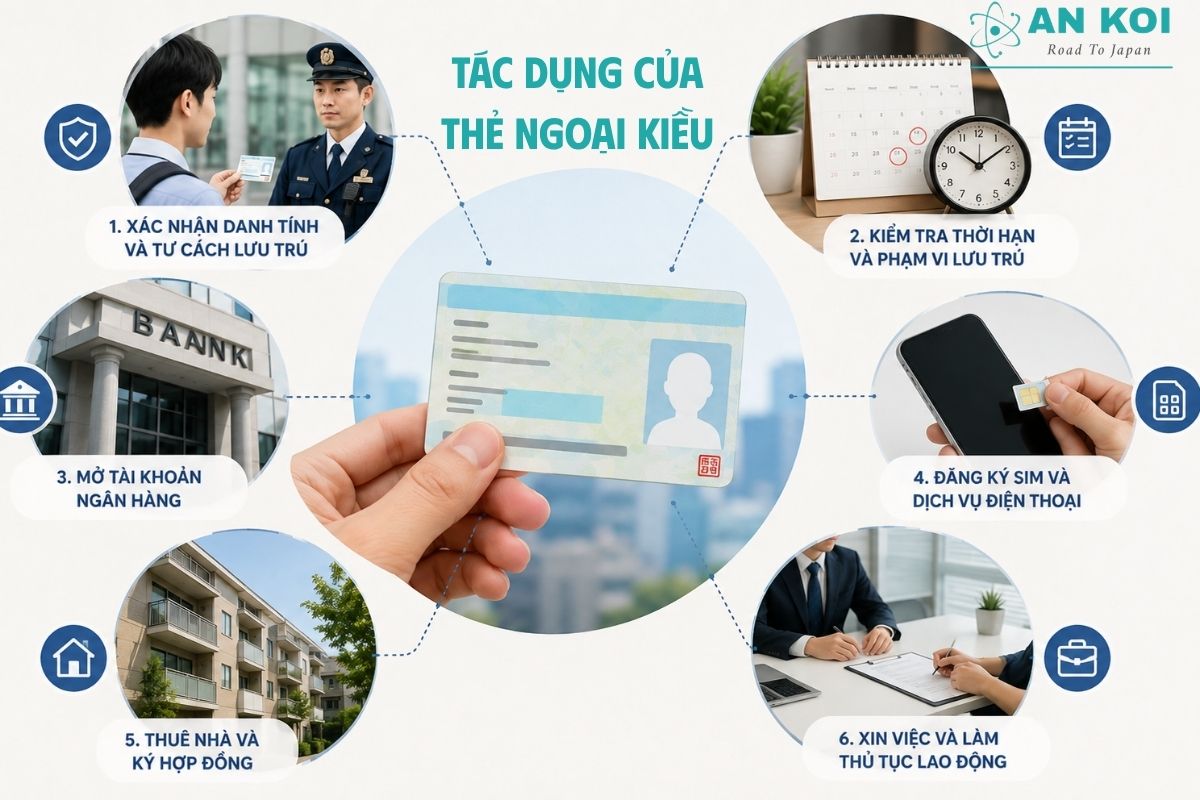
What is a Residence Card in terms of confirming identity and residence status for administrative procedures?
1. Confirming identity and residence status
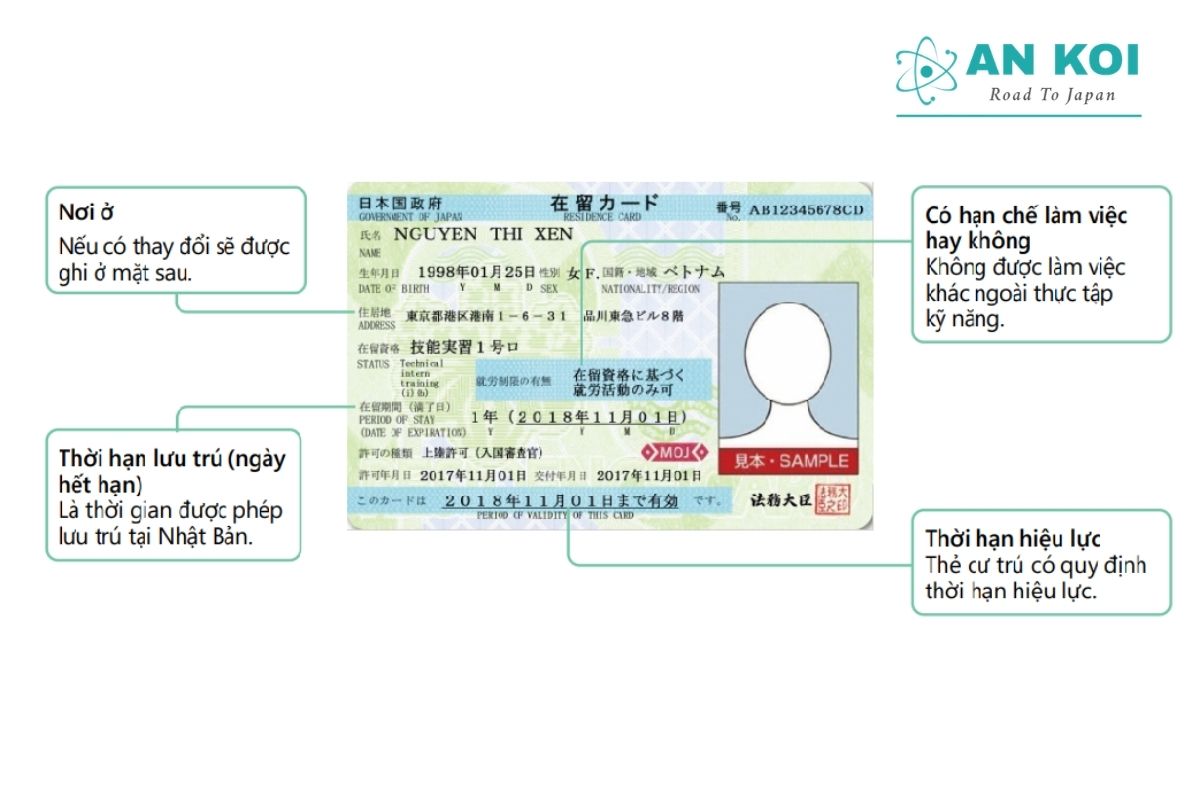
One of the most important aspects of understanding What is a Residence Card is its role in confirming a foreign national’s identity and residence status. A Japan residence card contains information that allows the relevant authorities to verify the holder and their current status of residence. Key details include:
- Personal information: Name, date of birth, nationality, and other details used to identify the cardholder.
- Residence status: Indicates the category under which the foreign national is residing in Japan, such as student or work status.
- Permitted activities: Helps identify the activities the holder is allowed to engage in under their residence status.
Therefore, when learning What is a Residence Card, you should not view it as just an ordinary identity document. The residence-status information on the card is directly connected to a foreign national’s right to study, work, and live in Japan.
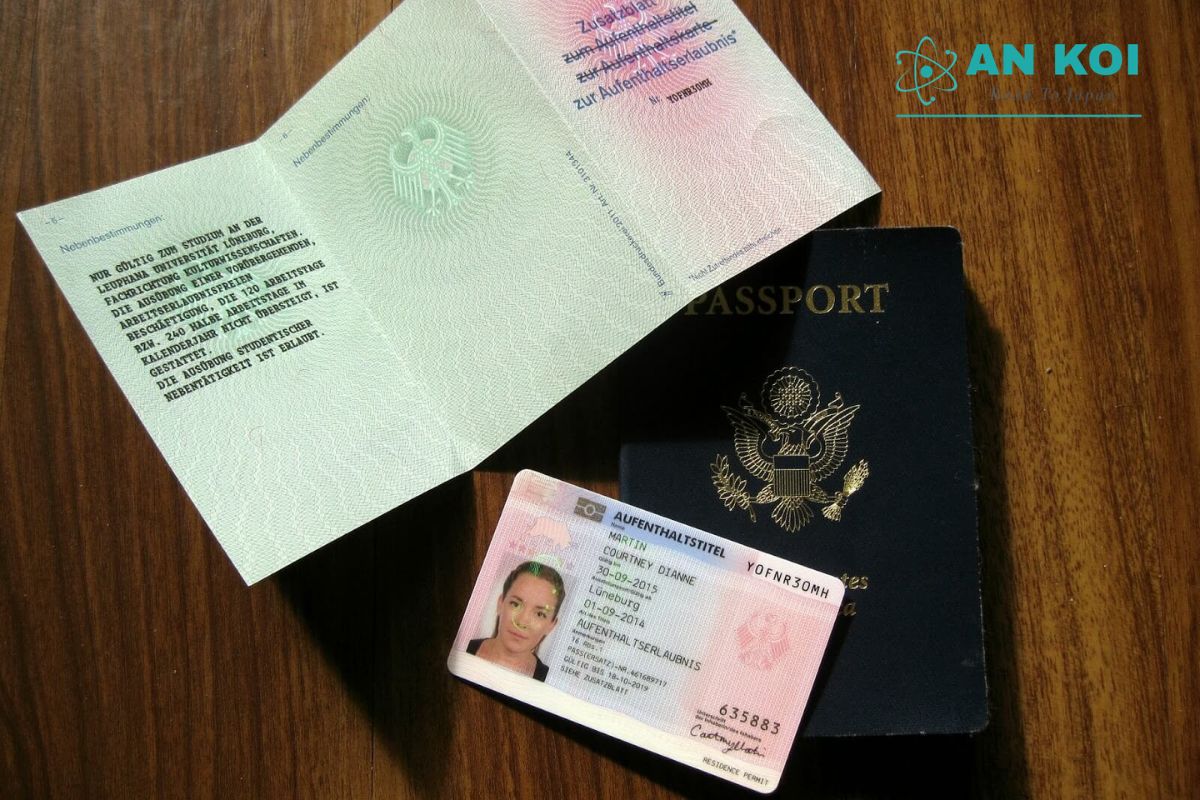
Personal information, residence status, and permitted activities are clearly shown on a Japan residence card
2. Checking the period and scope of stay
In addition to confirming identity, understanding What is a Residence Card also involves knowing how it helps you track your permitted period of stay. Cardholders should regularly check the validity information on their Japan residence card so they do not miss important deadlines. Pay particular attention to:
- Period of stay: Shows how long the foreign national is permitted to remain in Japan under the current residence status.
- Residence status: Should be checked against the person’s actual job, study program, or activities in Japan.
- When procedures are required: As the period of stay approaches its end, check early whether you need to extend your stay or change your residence status.
Regularly reviewing the information on your card helps you stay proactive throughout your residence in Japan. If your residence circumstances change, confirm the required procedure with the immigration authorities rather than continuing to rely on outdated information.

Checking the period of stay on the card helps foreign residents complete extension procedures at the appropriate time
3. Opening a bank account
When opening a bank account in Japan, a Japan residence card is commonly used to verify identity and residence status. Depending on the bank, you may also need to provide an address, telephone number, or additional supporting documents.
A Japan residence card is commonly used to verify identity when opening a bank account
4. Renting a home and signing contracts
When renting a home in Japan, a Japan residence card may be used to verify your identity, residence status, and period of stay. It is also one of the documents commonly requested when completing a rental application or contract.
5. Applying for jobs and completing employment procedures
For foreign nationals working in Japan, a Japan residence card allows employers to check the holder’s residence status and the scope of work they are permitted to perform. Information on the card may also be used when completing employment, insurance, and tax procedures.
6. Registering a SIM card and mobile phone service
A Japan residence card is commonly used to verify identity when purchasing a SIM card or registering for mobile phone service. Applicants should check the card’s validity period and prepare any additional documents required by the service provider.
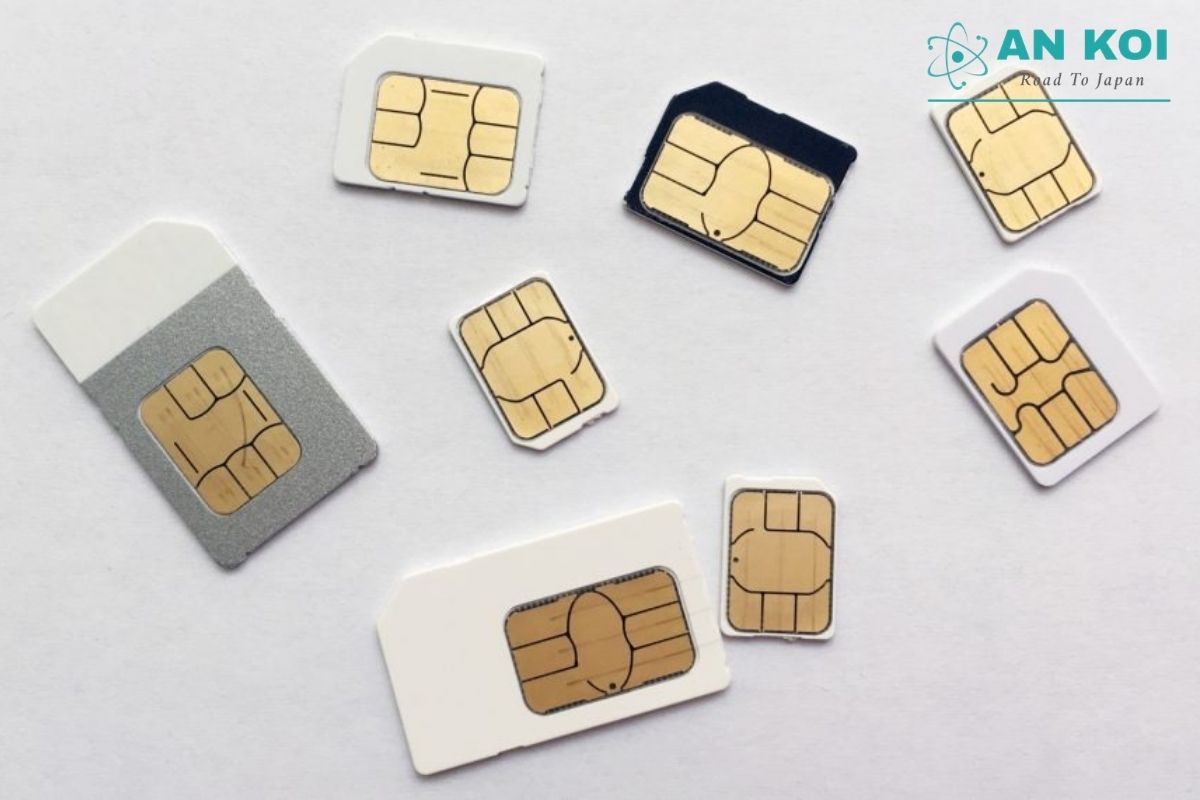
A Japan residence card is used to verify identity when registering a SIM card or mobile phone service
When is a residence card issued in Japan?
After understanding What is a Residence Card, newcomers should also know that the timing of card issuance can vary depending on where they complete immigration procedures. Japan residence cards are issued to foreign nationals who qualify as medium- to long-term residents under Japan’s residence management system.
- Issued immediately at the airport: Medium- to long-term residents may receive their card after completing immigration procedures at designated airports and seaports that issue residence cards on arrival.
- Issued and mailed after entry: If you enter Japan through an airport or seaport that does not issue the card on the spot, your passport will include a note indicating that the card will be issued later. After you complete the required residential address notification, your Japan residence card will be mailed to the registered address.
Note: A person who has newly become a medium- to long-term resident must report their residential address within 14 days of establishing a place of residence. If the card was not issued at the airport, the person may use their passport in accordance with the applicable guidance when registering the address.
Understanding What is a Residence Card also includes knowing when you receive it: it may be issued at the airport or mailed after you register your address
>> See also:Renewing a residence card in Japan: Latest procedures and requirements for 2026 – AN KOI
Rules for using a Japan residence card
After understanding What is a Residence Card, foreign residents also need to know how to use this document correctly while living in Japan. Japan’s residence card system has specific rules that cardholders must follow to ensure their residence information remains accurate and valid.
Requirement to carry the card when going out
One important rule to understand when learning What is a Residence Card is the requirement to carry the card in daily life. Foreign nationals who are required to hold a Japan residence card must carry it when outside and present it when legally requested. Keep the following points in mind:
- Carry the original card: Do not rely only on a photo or photocopy of the card when you go out.
- Present it when requested: The card may be used to verify a foreign national’s identity and residence status.
- Do not give the card to another person: The card is issued specifically to the named holder, who is responsible for keeping and using it.
For newcomers to Japan, developing the habit of checking for the card before leaving home can reduce the risk of forgetting or losing this important document.
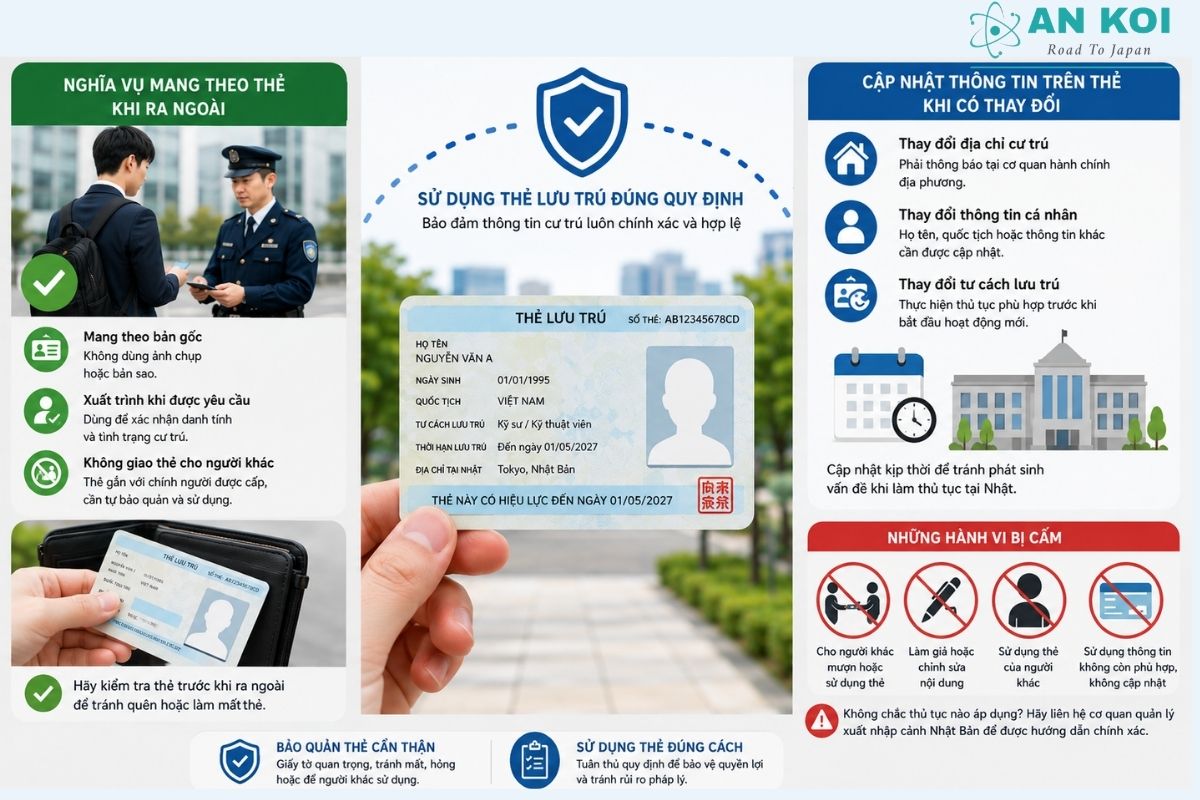
Residence cardholders should carry the original card and should not give it to another person when going out
Updating information on the card when changes occur
The information on a Japan residence card should accurately reflect the holder’s actual circumstances. Therefore, when a change occurs that must be reported, foreign residents need to complete the relevant procedure with the competent authority within the prescribed period. Common situations include:
- Change of residential address: When moving, complete the required address notification procedure with the local municipal authority.
- Change of personal information: Changes to your name, nationality, or certain other details shown on the card may need to be reported and updated.
- Change of residence status: When changing from student status to a work status or another category, complete the appropriate procedure before beginning the new activity.
Keeping your information updated ensures that the details connected with What is a Residence Card remain consistent with your actual residence status and helps prevent problems when completing procedures in Japan.
Prohibited uses of a residence card
In addition to knowing What is a Residence Card, cardholders need to understand what they are not allowed to do with a Japan residence card. Because it is an important personal document, lending it, forging it, altering it, or using it improperly can have legal consequences. Avoid the following actions:
- Lending the card to another person or allowing someone else to use it: The card is issued only to the person whose information appears on it.
- Forging or altering the card: Do not change any information printed or otherwise displayed on the card.
- Using another person’s card: Do not use identification that does not belong to you to prove your identity or residence status.
- Continuing to use outdated information: When your residence status or registered information changes, complete the required update procedure.
In particular, if you are unsure What is a Residence Card or which procedure applies to your situation, check guidance from Japan’s immigration authorities rather than relying only on informal advice.
When do you need a new Japan residence card?
After understanding What is a Residence Card, you should know when the card must be replaced or reissued. A new Japan residence card is generally associated with the end of a period of stay, changes to registered information, or problems with the physical card.
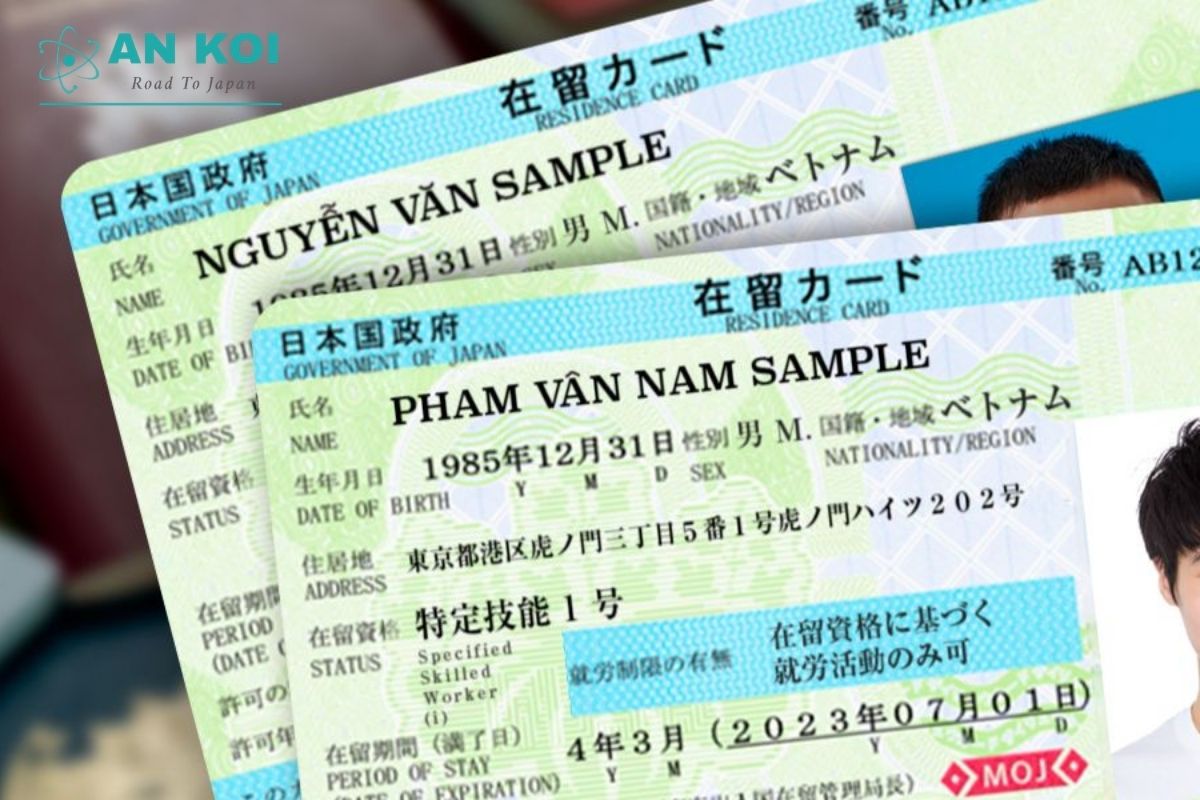
Lending a residence card, forging it, or altering the information on it are prohibited actions
When the card expires or your residence status changes
When considering What is a Residence Card in the context of renewal, pay attention to both the validity shown on the card and your period of stay. When an extension of stay or a change of residence status is approved, a foreign resident may be issued a corresponding new card.
- The card is approaching expiration: Check the extension procedure for your residence status early.
- Your residence status changes: Complete the appropriate procedure before moving to a new type of activity.
- A new card is issued: Receive the new Japan residence card as part of the outcome of the application procedure.
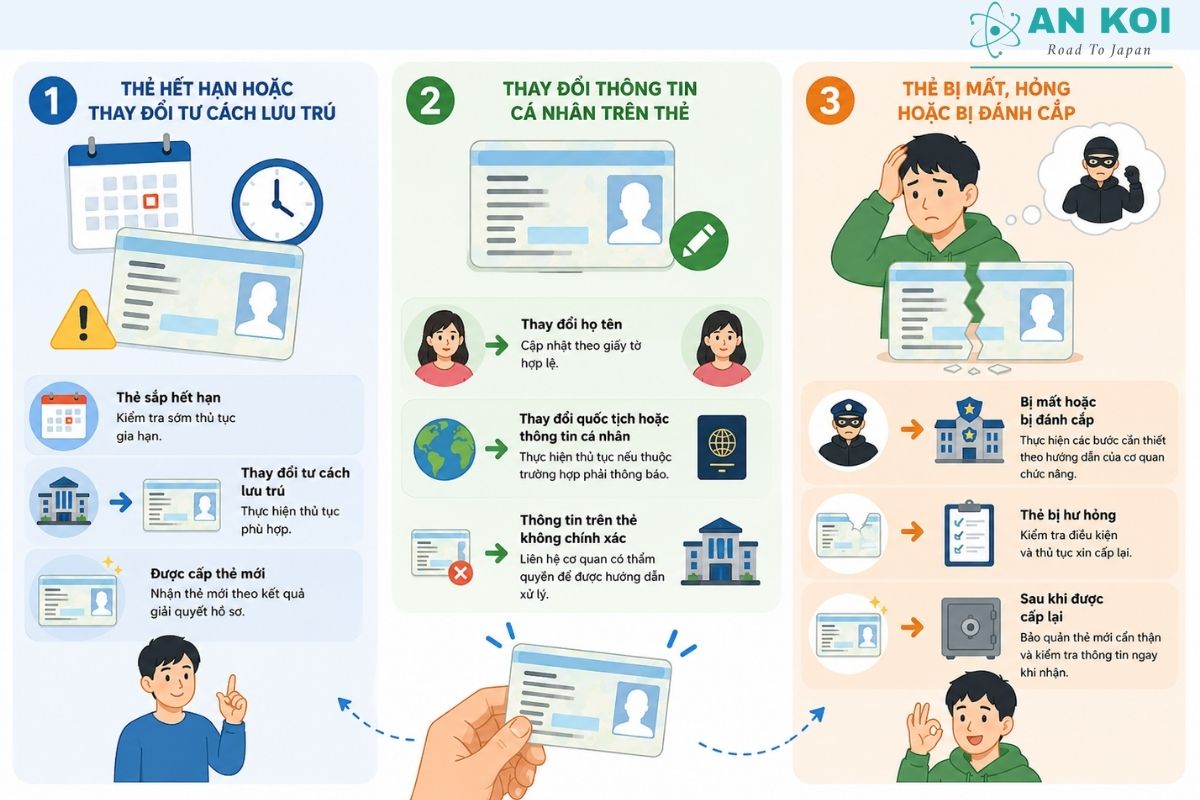
When a card is nearing expiration or residence status changes, a foreign resident may be issued a new residence card
Changes to personal information on the card
If information shown on a Japan residence card changes, the cardholder should check whether there is a legal obligation to report and update it. Do not continue using old information when a change must be registered.
- Change of name: Update the information using valid supporting documents.
- Change of nationality or personal information: Complete the applicable procedure if the change falls within a category that must be reported.
- Incorrect information on the card: Contact the competent authority for instructions on how to correct the issue.
What to do if the card is lost, damaged, or stolen
If the document discussed under What is a Residence Card is lost or no longer intact, the holder should promptly complete the appropriate procedure. Depending on the reason, this may involve applying for a replacement Japan residence card.
- Lost or stolen: Follow the necessary steps in accordance with the instructions of the relevant authorities.
- Damaged card: Check the eligibility requirements and procedure for reissuance.
- After receiving a replacement: Keep the new card safe and check all information immediately after receiving it.
What is a Residence Card when it is lost, damaged, or stolen? The holder should promptly complete the procedure to obtain a replacement
In summary, understanding What is a Residence Card helps foreign residents stay better prepared while studying, working, and living in Japan. Check the information and validity period on your card, and complete any required updates or reissuance procedures in accordance with the rules. Using a Japan residence card correctly not only makes administrative procedures more convenient but also helps maintain lawful residence throughout your stay in Japan. If you are studying in Japan and need assistance with daily life and related procedures, you can explore AN KOI’s international student support service.
Latest Posts


Hashtags
Contact


